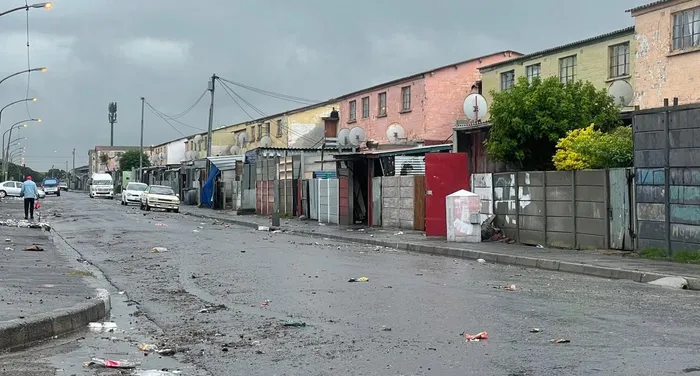
Image Source: Sunday Independent
Local – Social Housing Activist, Abdud-Dayaan Keown, accused the city of Cape Town of enforcing a form of economic apartheid following reports that residents face jail time or an eight-hundred-thousand-rand fine for selling goods from their homes.
The city’s deputy mayor, Eddie Andrews, defended the crackdown, claiming authorities were acting on complaints and that zoning laws should apply equally to all residents. Critics, however, say the policy disproportionately targets the poor while wealth inequality across the city remains unchecked.
Keown said the bylaws amounted to a declaration of war on the city’s most vulnerable residents, arguing that law enforcement was being weaponised against ordinary people trying to survive. He described the city’s approach as punitive and structurally anti-poor, saying its reputation for harsh enforcement had been long in the making.
“City of Cape Town has become the bylaw capital of the country. We are living in a city that treats survival as a crime. When you have municipal police deployed to target granny’s trying to make ends meet, the system is no longer serving the public. It is waging actually war on the poor.”
Survival Criminalised as Cost-of-Living Bites
South Africa’s cost-of-living crisis continues to push more residents toward informal trading as a means of survival, with unemployment and failing social safety nets leaving many with few alternatives. The city, Keown said, was making a bad situation worse.
Keown pointed out that the very people being targeted had been forced into informal trading by circumstances beyond their control. Fining residents who had no other income, he said, was not law enforcement — it was economic cruelty dressed up in municipal language.
“The whole country is facing a cost-of-living crisis, staggering unemployment, and failing social safety nets. When the state fails to provide, citizens turn to self-reliance and informal trading. Cape Town’s response is to fine them money they don’t have, pulling them deeper into poverty.”
Wall Plans Condemned as Economic Apartheid
A proposed wall running from the airport through surrounding areas has drawn further condemnation, with many seeing it as an attempt to conceal poverty from tourists and wealthier residents. Keown said the city’s priorities revealed a troubling obsession with aesthetics over the basic dignity of its poorest citizens.
He argued that the wall was not a security measure but a statement about whose presence the city valued and whose it sought to erase. The contrast between gleaming Atlantic Seaboard properties and the squalor of the Cape Flats, he said, made the city’s intentions plain.
“They want the labour of the poor to clean the streets and build the highrises, but they don’t want the presence of the poor on their sidewalks when they’re trying to feed their children. Under these bylaws, a person’s desperate attempt to survive is recategorised as a public nuisance or an obstruction.”
Keown called on residents to use the upcoming local government elections to hold the city accountable, and urged the municipality to redirect resources toward economic development rather than enforcement. Activists, he said, were engaging ward councillors and mobilising communities to push back against enforcement actions on the ground.
“Instead of deploying law enforcement with fine books, they should deploy the economic development department with support infrastructure and microgrants. This is what we’re trying to tell the city. But it’s a city that’s tone deaf, tone deaf to the poorest of the poor because of their vision of what the city should look like.”
