Image Source: Moneyweb
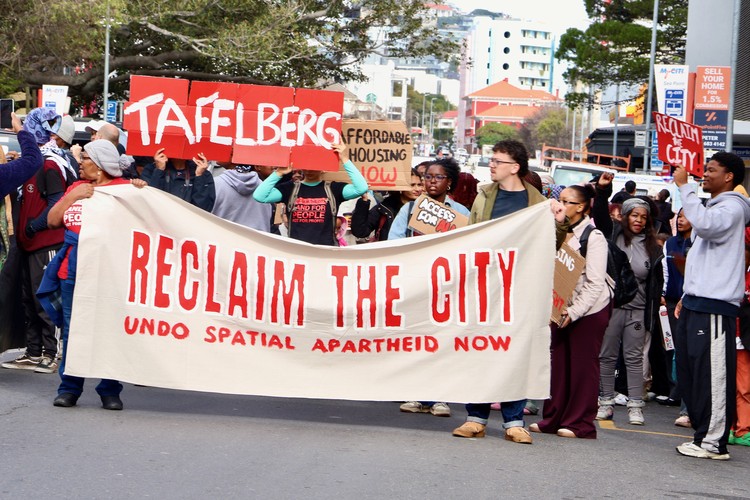
Local – Head of political organisation at Ndifuna Ukwazi (NU), Buhle Booi, hails the Constitutional Court’s judgement in the Tafelberg case as a triumph for the working class and a precedent for municipalities across South Africa.
The case stems from a 2015 decision by the Western Cape provincial government to declare the Tafelberg site, a prime piece of land in Sea Point, surplus and to sell it to a private entity. NU opposed the sale and argued the land should be used for social and affordable housing instead.
“This is a victory for the working-class people, for the people that have been pushed to the margins of society and cannot enjoy the city life like everyone else, who only come to the cities to sell their labour.”
Housing Crisis Demands Public Land
Booi said South Africa’s housing backlog stands at 3.7 million and is growing by 178,000 annually, while the Western Cape alone has about 600,000 families on the waiting list.
He said selling state-owned land in the middle of a housing crisis would deepen spatial apartheid, with working-class people kept on the urban peripheries while the inner city remained out of reach.
“We cannot afford to sell public land and view public land as a mere commodity, as something to be sold, because once it’s sold, because land is a finite resource. Once it’s gone, it’s gone forever.”
Precedent for the Whole Country
Following a public participation process that began last year, the provincial government committed to using the site for affordable and social housing, with 200 social housing units secured so far. NU is contesting a decision to reduce the development to eight storeys, which cuts the yield from 252 units.
Booi said the ruling reaches far beyond Cape Town and binds all spheres of government in how they handle public land.
He called it a precedent-setting case for every municipality in the country, one that requires departments to work together rather than dispose of land that could serve the public, and one that holds government accountable for ensuring land releases turn into homes.
“The different spheres of government cannot declare land a surplus when land can be used in the public interest. And part of what this judgment says is that different spheres of government must communicate with one another.”
