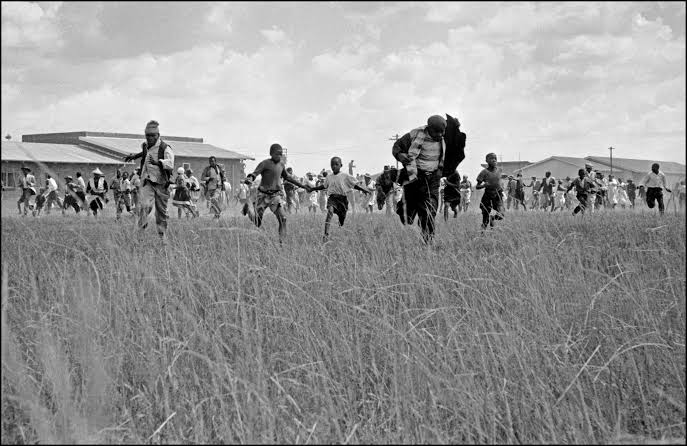
Survivors and families of the victims of the 1960 Sharpeville Massacre have launched a landmark class action lawsuit in the Gauteng High Court. The historic legal challenge, officially lodged last week, aims to overturn the apartheid-era Indemnity Act 61 of 1961 and compel the democratic government to deliver meaningful reparations.
The legal bid calls on President Cyril Ramaphosa, the Minister of Justice, and the Minister of Police to account for decades of unresolved harm and unfulfilled recommendations by the Truth and Reconciliation Commission (TRC).
The lawsuit directly addresses the events of 21 March 1960, when apartheid police opened fire on peaceful residents protesting against discriminatory pass laws in Sharpeville, firing 1,362 rounds in a single minute. The shooting left between 69 and at least 91 people dead and more than 100 to 238 wounded, most shot in the back whilst fleeing. To evade civil liability, the apartheid regime enacted the Indemnity Act the following year, which retroactively nullified victims’ claims.
SMread: When does the stress become panic disorder? Cost of living in ‘fight-or-flight’ mode
Breaking decades of statutory silence
Non-governmental organisation Lawyers for Human Rights (LHR) is spearheading the litigation on behalf of two distinct classes: surviving victims and surviving dependents. Key plaintiffs include Mr Sekolotsa Abram Mofokeng, who still carries a police bullet in his back after being shot at age 20, and Ms Elizabeth Chabili, who lost a finger as an 11-year-old child. Other lead litigants include Ms Paulina Mathinye and Mr Ishmael Poho, both of whom lost their fathers in the shooting and suffered enduring economic destitution as a result.
The legal team contends that the Indemnity Act of 1961 violates Section 34 of the South African Constitution, which guarantees everyone the right to access courts. Melissa Muyambo, legal counsellor at Lawyers for Human Rights, explained in an interview with Salaamedia:
“The victims of Sharpeville did not wait 66 years to seek justice. They tried to pursue legal claims after the immediate effect of the massacre. But because hundreds of claims for compensation was instituted on behalf of these injured survivors, the apartheid government enacted the Indemnity Act, and this act created a legal barrier to those who brought these claims and they rendered them void.”
SMread: Gauteng has enough school spaces, but not where they are needed
Seeking accountability beyond annual commemoration
The legal team is relying on contemporaneous archives and witness statements compiled since 2018 with local group Voices of Sharpeville. Legally, the claimants argue that the unconstitutional statutory block interrupted the standard prescription period, ensuring their current claims remain actionable in court.
Beyond financial relief, the applicants emphasise that the action is intended to restore public dignity and correct systemic failures. Speaking on the broader social impact of the case, Muyambo noted:
“For the people that we’ve worked for, this case is much more than compensation. The harm caused did not end on the 21st of March. People survived with serious physical injuries, families lost parents and breadwinners, children grew up in poverty after losing a parent, and people carried the psychological and emotional consequences of that day throughout their lives. We commemorate the 21st of March as Human Rights Day, but many of the actual people whose suffering gave that history its meaning have never received meaningful redress.”
The matter now awaits formal class certification and argument before the Gauteng High Court.
Image via Magnum Photos.
