Image Source: SABC News
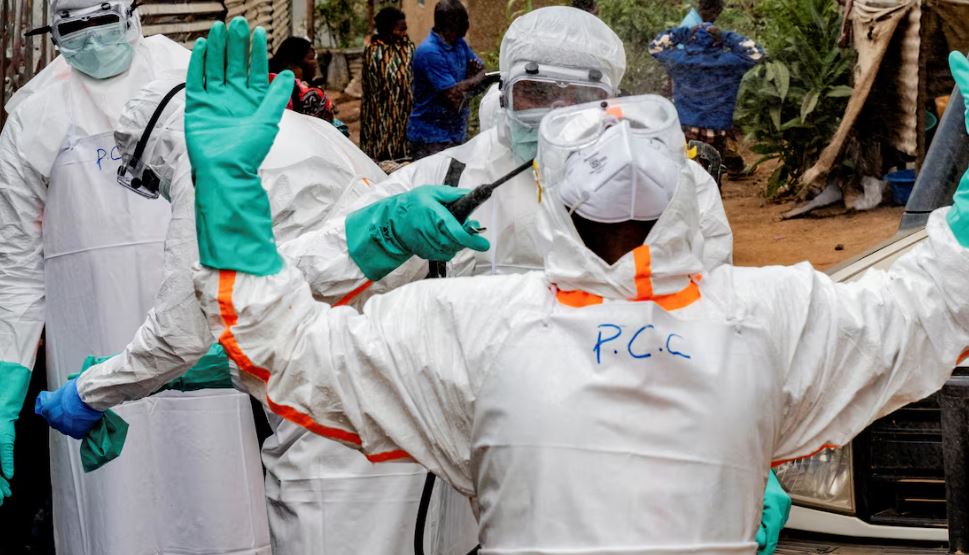
Africa – MSF Southern Africa’s Board President, Percy Chikide, said years of conflict, displacement and weak health systems were making it harder to contain the Ebola outbreak in the Democratic Republic of Congo, the deadliest in the country’s history. When an outbreak hits an already fragile system, he said, the damage is far greater than expected.
More than 4,000 people have died, and more than 8,000 cases have been confirmed since the outbreak was declared in May, according to health ministry figures.
Health workers have not been spared, and on 1 October Doctors Without Borders (MSF) confirmed that one of its own staff members had tested positive for the virus and was being evacuated to the Netherlands for treatment.
“We are facing probably what is the worst Ebola outbreak that we have had… More than 4,000 people have lost their lives, and these are very big numbers.”
Mistrust Keeping Patients from Care
Containing Ebola depends on communities reporting sick people, allowing contacts to be traced and bringing patients to treatment centres early. Without that trust, the virus keeps spreading quietly in homes.
Chikide said many people in affected areas were wary of health services after years of insecurity, displacement and poor living conditions. To win them over, MSF has been working with community leaders and setting up treatment centres inside communities so that people can be treated close to home.
“I think they’re estimating that around 60% of the deaths are occurring within communities before people reach treatment centres. So that goes to show that we still have much community mistrust of healthcare facilities.”
No Vaccine or Treatment for Strain
The outbreak is caused by the Bundibugyo virus, a rarer species of Ebola with no approved vaccine or specific treatment. Without them, teams are relying on isolation, contact tracing, patient care and community work to bring the virus under control.
Research is now running alongside the response. MSF is leading BRAVO, a study following frontline workers who receive Ervebo, a vaccine licensed for the Zaire strain of Ebola, while a separate trial, PARTNERS, is testing the monoclonal antibody MBP134 and the antiviral drug remdesivir.
“If we are not doing research in time, in good time before an outbreak, then it means that by the time an outbreak comes we are ill-prepared and we’re having to scrap around and run around and start researching while the outbreak is ongoing… We’re just researching so that by the time something hits us we are somewhat prepared to deal with it and that’s very very important.”
There are some signs of progress. Cases have fallen in Ituri province, which Chikide said accounted for about 70% of infections. Still, he warned this did not mean the outbreak was slowing, as other provinces, including North Kivu, were now reporting cases, including one three to four months after the outbreak began.
Uganda has reported a small number of linked cases, but the virus has largely been kept within the DRC’s borders. Chikide credited health and border authorities for this, citing measures such as mandatory isolation for people who had passed through hotspots. However, he said some patient contacts could still slip through, and it was too early to relax.
