Peace talks aimed at ending the long-running conflict in the eastern Democratic Republic of Congo (DRC) have hit a deadlock. The negotiations, held for months in Doha, have failed to produce an agreement.
This has triggered fresh violence in the North and South Kivu provinces. The renewed fighting violates a ceasefire and worsens the humanitarian crisis. Millions of people have already been displaced by the conflict.
The DRC government and the M23 rebel group blame each other for the new attacks. A peace agreement was expected on 18 August. However, talks collapsed over several key issues. These include the withdrawal of rebels from captured areas. The release of prisoners is another point of contention.
The failure of the Doha peace talks has led to calls for a national dialogue within the DRC to find a solution.
SMread: Sudan’s second unmaking: the proxy war the world refuses to name
Key disagreements and international involvement
A major obstacle is the integration of rebels into the national army. Many Congolese citizens oppose this. They do not want rebels in state institutions after a deal.
Kinshasa also demands that Rwanda withdraw its troops from eastern DRC. Kigali has linked this to the disarming of the FDLR militia. This group is composed of Hutus connected to the 1994 Rwandan genocide. This mutual mistrust has prolonged the peace talks.
International partners have tried to support the peace process. Delegates from 50 countries recently met in France. French President Emmanuel Macron announced plans to reopen Goma’s International Airport to allow humanitarian flights.
The airport was closed in January after M23 captured the city. The rebels have rejected France’s decision. They insist the airport’s status must be discussed at the talks in Qatar. The failure to find common ground at the Doha peace talks means the conflict, and the suffering of civilians, continues with no clear end in sight.
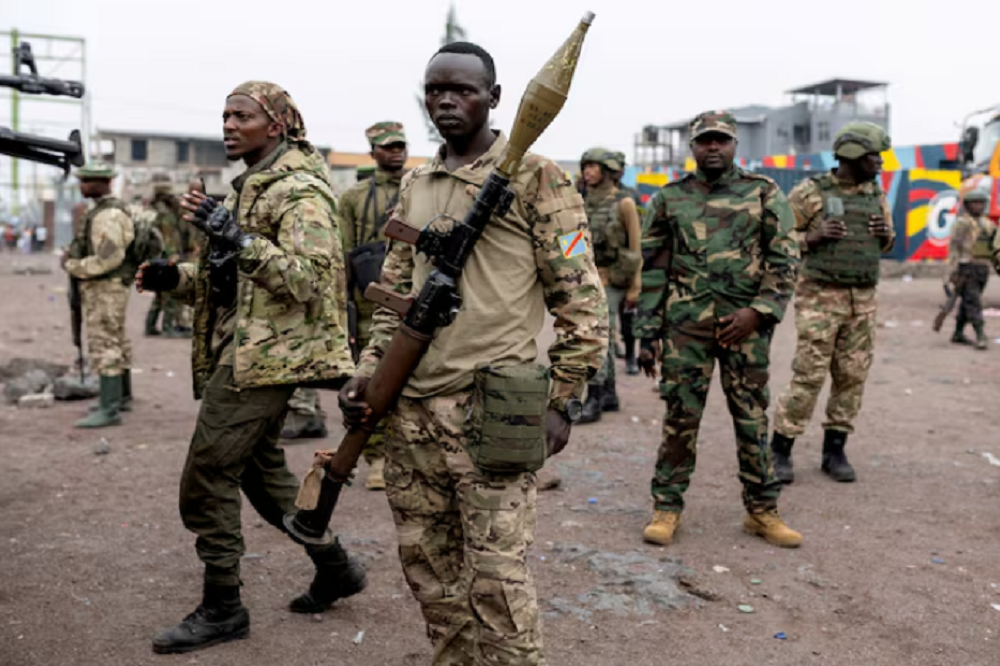
Image: Rebel fighters in eastern DRC. [Credit: Reuters]
