By: Ali Brahim Mohamed
The decision recently issued by the United Nations Committee against Torture concerning the case of Sahrawi detainee Abdelmoula El Hafidi constitutes a new positive development at the legal and human rights levels, within the context of efforts to shed light on the situation of Sahrawi political prisoners in Moroccan prisons, as well as the conditions of detention that violate human dignity to which they are subjected.
The Committee concluded that his conditions of detention in Aït Melloul prison, given their nature, their cumulative effect, their prolonged duration, and their repercussions on his physical and psychological integrity, constituted humiliating treatment, that is, a direct and actual violation of Article 16 of the Convention against Torture, read in conjunction with Articles 12 and 13, which set out the obligation of the State party to investigate and to guarantee the victim’s right to lodge a complaint.
The text of this decision is of particular importance because, on the one hand, it places the detention conditions of Sahrawi political prisoners, this time the student group, under the scrutiny of United Nations mechanisms and, on the other hand, highlights the responsibility of the Moroccan occupying State to guarantee respect for the dignity of detainees and for their physical and psychological integrity, and to open prompt and impartial investigations into complaints concerning ill-treatment and conditions of detention.
It also raises an extremely important issue that strikes at the heart of Moroccan propaganda and the role of the “human rights institutions” that it presents to the world, since the Committee’s findings raise serious questions. The first concerns the ability of these “institutions” to function in accordance with the provisions of the conventions, particularly the Convention against Torture, to which the Moroccan occupying State is a party. The second concerns the credibility of its arguments from now on in attempting to dissociate the violations suffered by the person concerned in the decision from the broader context characterizing the treatment of all Sahrawi political prisoners, particularly those who were detained with him in the same case (the student group, companions of the martyr El Ouali). Its content also makes it an important reference for documenting violations, seeking redress and compensation for harm, and ensuring their non-repetition.
All these new findings reinforce a body of decisions issued by the same Committee following similar complaints concerning certain Sahrawi political prisoners from the Gdeim Izik group. On this basis, it concluded that the acts of torture and ill-treatment committed by the Moroccan authorities in cases related to the Gdeim Izik camp had been established as not being individual or isolated cases, but rather a structural problem at the level of the Moroccan State with regard to this issue. It warned that the repetition of the same complaints raised concerns that went beyond individual cases.
We are therefore now faced with another issue concerning the student case file, and in light of the new findings in the case of one of them, we are faced with a new opportunity, focusing in the future, with regard to the other 11, on obtaining recognition from the Committee that humiliating treatment and the absence of an impartial and prompt investigation constitute a widespread common pattern on the part of the Moroccan State with regard to the group’s case as a whole.
Before going into the details of the decision, it is necessary to pause and clarify some of the stages through which the complaint passes, which are related to certain important facts concerning the issue of Western Sahara and human rights activists and political activists, which the Moroccan occupying State repeatedly refuses to acknowledge, even going so far as to evade them. During the second stage of the complaints process, which comes after the drafting and submission stage, that is, the exchange of written submissions between the two parties before the Committee, Morocco always focuses, before entering into the details, on erasing and suppressing the status of the person concerned, namely, “Sahrawi political prisoner and activist in the field of human rights or within the Sahrawi movement calling for independence.” This is where the first achievement is secured. For example, in the case of Mr. El Hafidi, the League for the Protection of Sahrawi Prisoners and the International Service for Human Rights, as partners in preparing the complaint, ensured that they provided all the information and evidence required to obtain explicit recognition of this status, establishing it legally before the Committee, so that the person concerned would not be regarded merely as “a person convicted in a criminal case.” The examination of the merits could then proceed, focusing essentially on the manner in which he was treated during his arrest and imprisonment and establishing the State’s failure to comply with the provisions of the Convention against Torture.
SMread: In Texas, ordinary Muslim religious practices are increasingly being treated as political threats
THE DECISION (CAT/C/84/D/1134/2022)
Despite the Committee’s conclusion that there was insufficient information to confirm acts of torture as referred to in Articles 1, 14 and 15 of the Convention, it nevertheless ruled precisely, in accordance with the information available in the written submissions and the text of the complaint, on the issue of the conditions of detention in Aït Melloul prison, focusing on what is set out in Article 16 considered on its own and also read in conjunction with Articles 12 and 13 of the Convention.
On this basis, the conclusion was as follows: the first violation was established under Article 16, which provides for the prohibition of cruel, inhuman or degrading treatment or punishment that does not reach the level of torture. The second violation, in connection with Article 16, concerns Article 13, which provides for a prompt and impartial investigation where there are reasonable grounds to believe that an act of torture has been committed. The third violation, also in connection with Article 16, concerns Article 12, which provides for the right of every person to lodge a complaint and the duty of the State to ensure that it is addressed and investigated.
Unlike the cases of the Gdeim Izik detainees, Article 16 constituted the cornerstone of this decision concerning the complaints of activist El Hafidi. After establishing, in the manner required by the International Service for Human Rights and the League for the Protection of Sahrawi Prisoners in the text of the complaint and in the written submissions, the existence of a violation of this article by the Moroccan occupying State, the Committee took into consideration all the facts presented to it cumulatively, rather than considering each fact separately from the others, so that they were presented as follows:
• A cell containing 40 detainees.
• The presence of only 3 toilets.
• The fact that detainees smoked inside the cell.
• The absence of windows.
• Insufficient natural light and air.
• The absence of heating.
• The dispute concerning the availability of drinking water.
• The prolonged duration of detention.
• The physical and psychological impact of these conditions on the individual.
All this established information led the Committee to consider the matter in its cumulative effect and as a direct cause of the deterioration of Mr. Abdelmoula El Hafidi’s situation and of the impact on his physical and psychological integrity. It did not consider the issue to concern overcrowding in prison alone, but rather the totality of the aforementioned conditions, which, according to its analysis, reached the level of what it explicitly regarded as humiliating treatment, prohibited under Article 16 of the Convention against Torture, to which the Moroccan occupying State is a party and which it is required to fully respect.
The conclusion reached by the Committee compels us to open the debate on addressing the catastrophic situation of all Sahrawi political prisoners detained by the Moroccan occupying State, and constitutes another damning argument that can be used in the future to respond to the misleading propaganda that the occupation and those who support it repeat in international forums through certain paid organizations and the institutions it has created for this purpose.
With regard to the invocation of part of Article 12, which requires the occupying State to conduct a prompt and impartial investigation where there are reasonable grounds to believe that a violation of the provisions of the Convention has occurred, the Committee found that there had been no investigation into the conditions of detention and humiliating treatment, particularly after finding that the assertion by the Moroccan occupying State that “the prison conditions meet the standards” was not sufficient on its own. On the contrary, it was incumbent upon it to provide concrete information and evidence enabling the Committee to verify this, especially since the complainant had provided a detailed description of those conditions that violated Article 16.
As for the inclusion of Article 13, it has, in light of this decision, become highly important for the remaining political prisoners in the group of companions of the martyr El Ouali, since it guarantees a person who alleges that they have been subjected to torture or cruel or humiliating treatment an effective opportunity to lodge a complaint, and requires the State party to treat it seriously. With regard to the case of Mr. El Hafidi, and the same applies to his other companions, the Committee considered that the occupying State, in all the written submissions it presented, had failed to establish the existence of the appropriate and serious response required concerning the poor conditions of detention. It therefore concluded that there had been a clear and direct violation of Article 13 read in conjunction with Article 16.
What the United Nations mechanism responsible for combating torture concluded regarding the detention conditions of activist Abdelmoula El Hafidi in Aït Melloul prison (Morocco), and the manner in which it addressed his extremely poor detention conditions, which as a whole violate Articles 12, 13 and 16, makes the text of the decision an official document and a reference that can be relied upon to strengthen the complaints of the other members of the group if they establish, in the required manner, the following conditions:
• They were detained in the same prison;
• They were detained during the same period or during periods close to one another;
• They were detained under the same conditions;
• They shared the same cell or the same detention conditions;
• They were subjected to the same isolation regime;
• They encountered the same problems related to water, hygiene or overcrowding;
• They were deprived of medical care or visits;
The availability of this information with such a precise description would constitute an extremely strong reference supporting the arguments of the other detainees in demonstrating the existence of a widespread common pattern, based, of course, on the Committee’s findings, which do not depend solely on what will be presented in individual complaints in terms of details and particular circumstances, but focus more specifically on the situation of the prison mentioned in the text of the decision and on the following comparable objective elements (40 detainees + 3 toilets + smoking inside the cell + absence of windows, natural light and air + inadequate conditions + prolonged duration of detention). This means that, when brought together and established, they may lead the Committee to adopt the same position of finding the existence of humiliating treatment prohibited under Article 16. Therefore, the essential factor now is the ability of one of his companions from the group, or another detainee, to establish that he was detained under the same conditions or under substantially similar conditions, and to rely on the Committee’s findings documented in the text of the decision and refer to: “the United Nations Committee having already considered that these conditions, in the case of one of the members of the group of companions of El Ouali, were contrary to Article 16 of the Convention against Torture.”
SMread: Analyst: Trump running out of ideas as US-Iran clashes resume
The legal conclusion of this decision
The true strength of this decision, which is equally attributable to the International Service for Human Rights and the League for the Protection of Sahrawi Prisoners, lies in obtaining explicit recognition at the United Nations level that the detention conditions of Sahrawi activist Abdelmoula El Hafidi at the hands of the Moroccan occupying State in Aït Melloul prison constituted, as a whole, humiliating treatment contrary to Article 16 of the Convention against Torture and Other Cruel, Inhuman or Degrading Treatment or Punishment, and that Morocco, as a State party, failed to fulfill its obligations concerning investigation and the victim’s right to lodge a complaint in accordance with Articles 12 and 13. The result was:
There is no doubt that the decision, by its nature, does not automatically grant the group of companions of El Ouali the status of victims and directly concerned persons, this being, of course, due to the fact that the complaint is individual under Article 20 of the Convention. However, it constitutes a legal reference and an extremely strong argument for those who were subjected to similar detention conditions, particularly if they were detained with him in the same prison and under the same conditions.
What remains for them is to focus on establishing the factual similarity between their situation and that of their companion, and then rely on the Committee’s criterion confirming that deprivation of liberty does not deprive a detainee of their right to protection against humiliating treatment, and that detention conditions must comply with respect for human dignity. This is a principle that can be relied upon independently in the cases of other detainees.
In conclusion, it is necessary to point out that the decisions of the United Nations Committee against Torture, known by the abbreviation (CAT), and in particular the decisions issued in individual complaints under Article 22 of the Convention against Torture, are not subject to a statute of limitations in the usual sense. No provision of the Convention indicates a specific period after which the State’s responsibility for implementing what the Committee has decided would come to an end.
On the contrary, the decision remains in force with regard to the principle of its implementation, and the Committee grants the State concerned a period of 90 days from the date of the decision to provide information on the degree of implementation of the recommendations. The expiry of this period does not render the decision void; rather, it means that the State has not implemented the decision or has not provided the required information.
For this purpose, with regard to follow-up, the Committee against Torture, in accordance with rule 120 of its rules of procedure, has established other procedures through a rapporteur and a special mechanism responsible for monitoring the implementation of decisions concerning individual complaints.
The Committee has confirmed that it may maintain an open dialogue with the State where implementation is incomplete, in addition to publishing annual reports on these decisions, which remain documented against the State party in the United Nations archives. In other words, for us, the legal battle does not end with the issuance of the decision, but with precise monitoring of the situation of the victims, their protection and that of their families against all forms of harassment and acts of reprisal, as the objective also remains, until national independence is achieved, to put an end to all acts of torture and systematic ill-treatment used by the Moroccan occupation against activists, fighters, journalists, as well as their relatives and families.
Paris : September 3, 2026
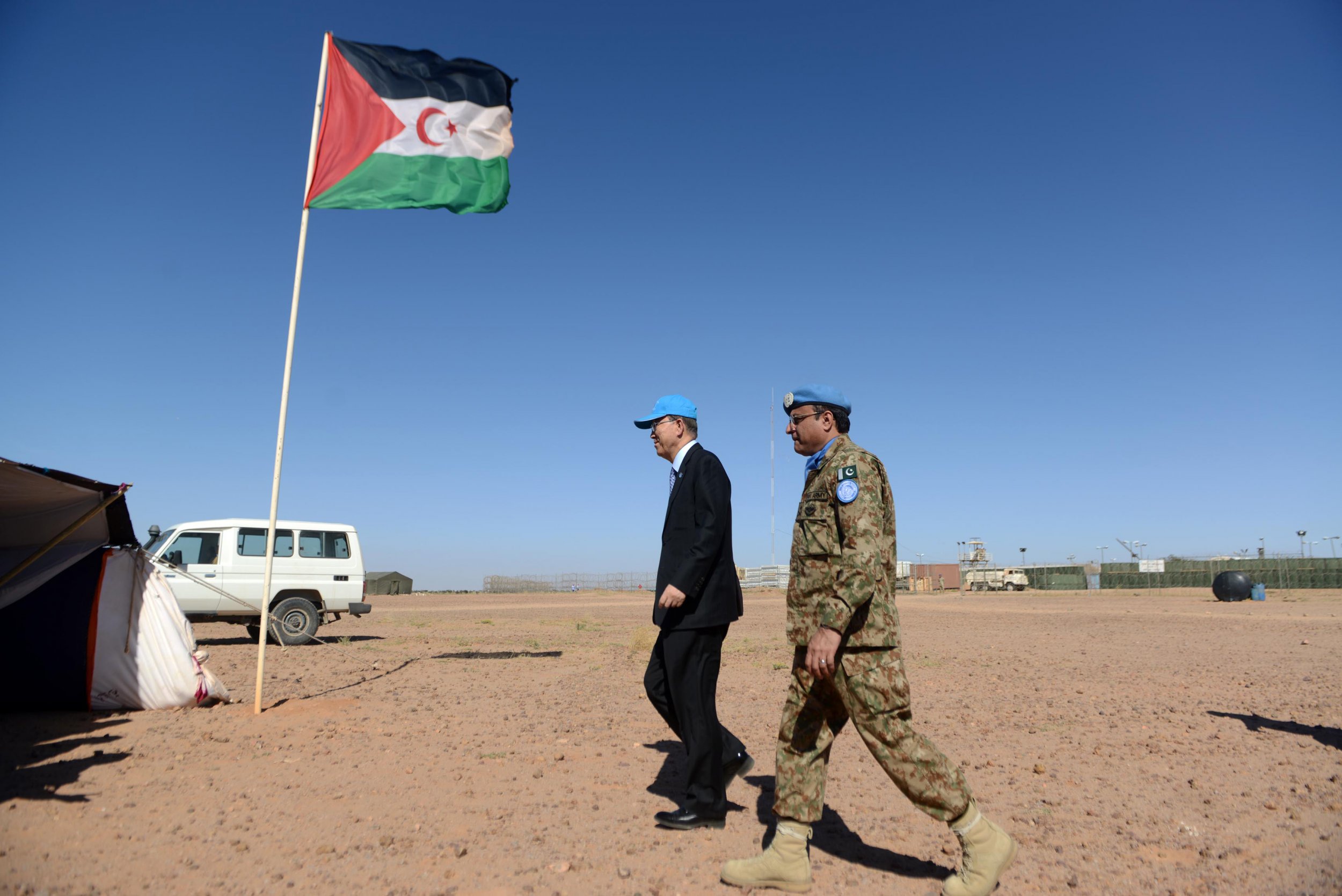
Image via Newsweek.
