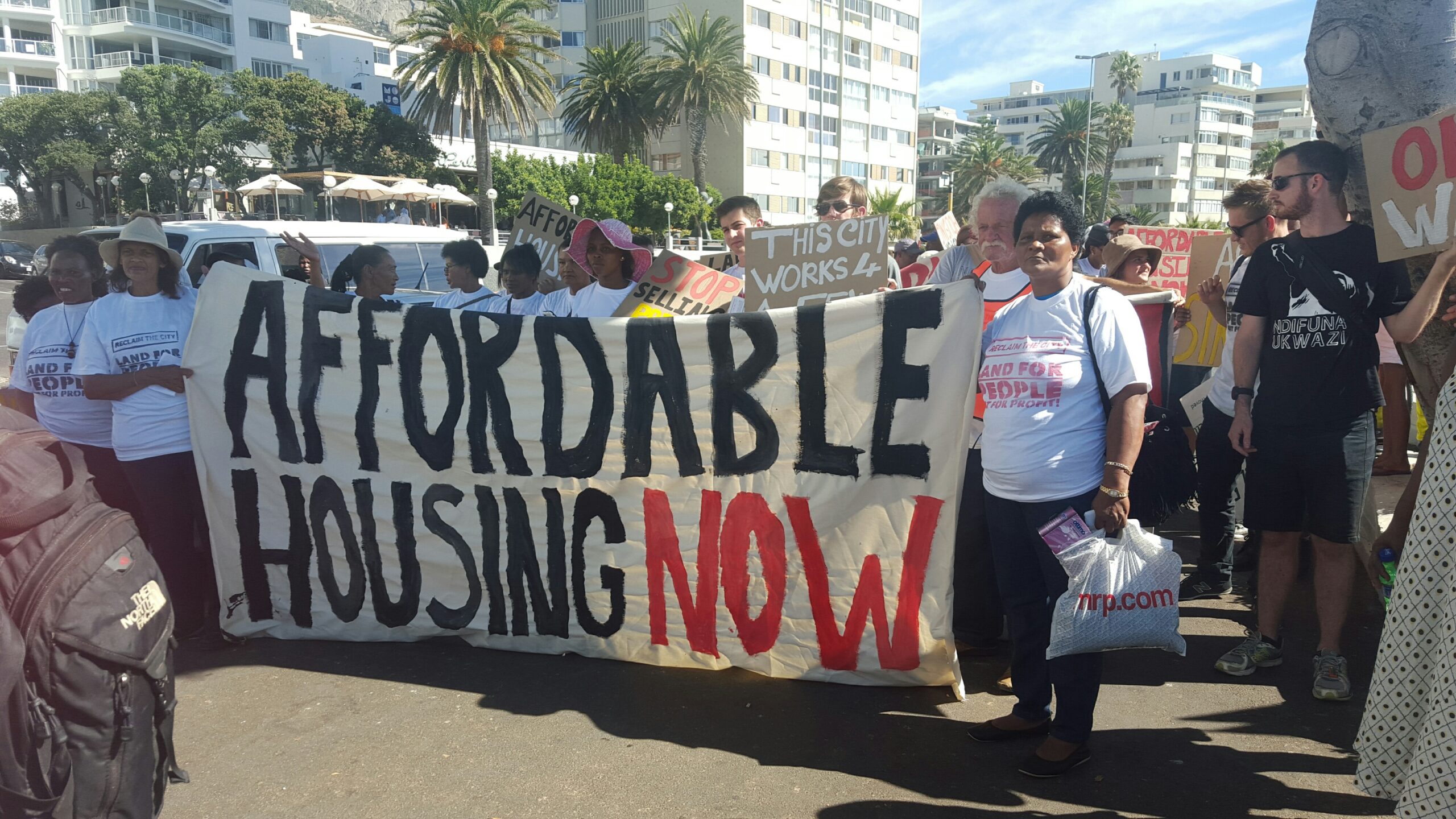
Image Source: GroundUp
Local – Buhle Booi, Head of Political Organising and Campaigns at Ndifuna Ukwazi, warns that Cape Town’s housing crisis has reached a critical point as locals are being priced out of the city they grew up in.
In the first five months of 2025 alone, international buyers poured over 1 billion rand into Cape Town properties, making homeownership increasingly unattainable for first-time buyers and young professionals.
The crisis extends beyond property purchases to the rental market, where digital nomads arriving with dollars and euros have driven costs to unprecedented levels.
The affordability crisis forces many residents to live in peripheral communities, with workers spending a third of their salaries just on commuting to the city centre.
“Rentals in Cape Town are exorbitant. For a studio apartment, you don’t pay less than 7,000 to 10,000,” Booi said.
Cape Town remains one of the most unequal cities in the world, he noted, with a massive housing backlog of approximately 400,000 units.
“An individual should not spend more than 30% of their salary on housing. It means that kind of housing is not affordable,” Booi said.
People Over Profit
Ndifuna Ukwazi advocates for an inclusionary housing policy that would require private developers to contribute affordable housing units when building market-related properties. Booi expressed frustration with the city’s response to calls for rent control.
“The precedence that must assume precedence above everything else must be people, not profit,” he said, dismissing the mayor’s argument that rent control isn’t economically viable.
The problem is compounded by the proliferation of short-term rentals catering to tourists and digital nomads.
Over 3,000 homes in Cape Town have been converted to Airbnbs, removing them from the long-term housing market and denying residents the security of tenure they need.
“It cannot be correct when there’s a housing crisis that homes are used for short-term leasing,” Booi said.
He called for the city to release underutilised public land, including parking lots, to yield 2,000 affordable homes. The mayor must prioritise serving the masses rather than market interests, Booi said.
