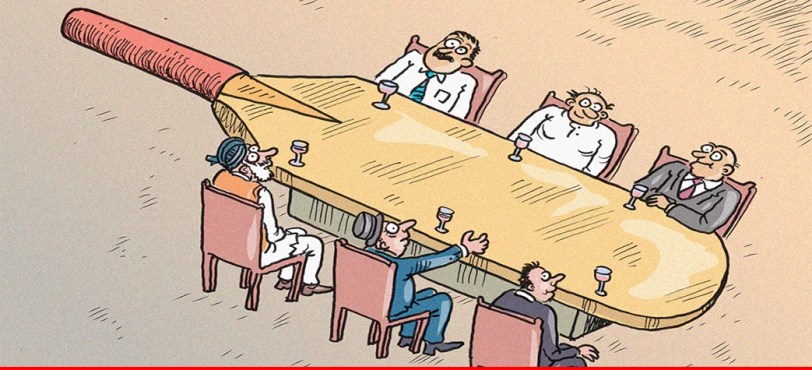
Cricket was once imagined as the gentleman’s game, a sport that bridged cultures, built friendships, and kept alive the dream of peaceful rivalry. But in South Asia today, cricket increasingly mirrors geopolitical tension, nationalism, and politics. The recent controversy over the ICC Men’s T20 World Cup 2026 and the relationship between India, Bangladesh, and Pakistan reveals how deeply politics has penetrated the pitch.
A controversy beyond the boundary
In early 2026, the Bangladesh Cricket Board (BCB) expressed discomfort with playing their T20 World Cup matches in India, citing security and political concerns. Bangladesh asked for their fixtures to be moved to Sri Lanka, a request rooted in a broader climate of political unease rather than purely sporting judgment.
According to the Times of India, the issue was heightened when the Pakistan Cricket Board (PCB) publicly backed Bangladesh’s stance in a formal letter to the International Cricket Council (ICC), even pausing their own World Cup preparations in solidarity.
This isn’t just a debate about venues, it reflects how cricket boards are now active participants in diplomatic signalling and political confrontation.
SMread: Foreign buyers fueling Cape Town housing crisis
Player or pawn? How politics shaped a cricket decision
The cause of this diplomatic crisis was the BCCI’s order to the IPL franchise Kolkata Knight Riders to release Bangladesh fast bowler Mustafizur Rahman from their 2026 IPL squad.
According to The Daily Guardian, BCCI said the decision was due to “recent developments going on all across.”
The controversy began with reports of violence against Hindu minorities in Bangladesh in late 2025. These incidents caused public anger in India and were widely shared on social media. Many political leaders and religious figures in India openly criticised KKR for signing a Bangladeshi player to a high‑profile IPL contract while such violence was taking place. They argued that including Mustafizur could be seen as insensitive or politically provocative given the context.
The pressure grew as commentators and some politicians framed Mustafizur’s participation not as a sporting contract but as a symbolic issue tied to broader national identity and communal safety concerns. Some critics went as far as threatening disruptions at matches if he played. In response, BCCI officials decided it was easier to remove him from the squad to avoid further controversy, even though Mustafizur was legally contracted and had been picked in the auction.
Bangladesh views this as a political decision rather than a cricketing one. Its cricket board and government accused the BCCI of yielding to pressure from extremist and nationalist groups and of using sport to make a political statement. They argued that Mustafizur had done nothing related to politics or violence and was being punished for events in his country. This perception led Bangladesh to escalate the dispute, including pushing the ICC to move World Cup matches out of India.
Sport hijacked by politics
According to the Daily Star, former Bangladeshi cricket administrator Syed Ashraful captured what many observers feel: “Cricket has been hijacked by politicians.” These sentiments point to an era where sports administration is no longer insulated from political interference.
It raises meaningful questions:
- Who decides what is “safe” or “unsafe” to play?
- When does cricket represent a nation, and when does it serve a political narrative?
- Can players speak freely, or are they forced into symbolic silence?
A shift in the Pakistan–India cricket rivalry
The cricket rivalry between India and Pakistan, historically one of the most intense in the sport, has long been more than a game. Matches often stop diplomatic clocks, but they can also restart tensions when political relations sour. The Asia Cup 2025 saw cricket become political theatre, blurring the lines between celebration and nationalistic assertion.
While bilateral series have been rare due to political tensions, world tournaments bring the teams together under flags heavier than sport.
In recent years, players have refused customary handshakes before or after matches, and on-field gestures have been scrutinized as symbolic statements rather than sporting etiquette. Umpires and match officials often face pressure from boards and governments to maintain appearances that align with national pride.
Fans on social media interpret almost every move through a political lens, turning simple mistakes or celebrations into national controversies. This environment makes it hard for players to act naturally, as every expression can be criticized or politicized. Former players and commentators have said that young cricketers are being trained not only to win matches but also to navigate political expectations, which distracts from the spirit of fair play.
Even in world tournaments chants in the stands are read as statements of national identity rather than enthusiasm for the game. For example, in the 2023 ICC Cricket World Cup match between India and Pakistan at Ahmedabad’s Narendra Modi Stadium, a section of the crowd chanted “Jai Shri Ram” as Pakistan wicket‑keeper‑batsman Mohammad Rizwan walked back to the pavilion after being dismissed.
The chant has strong religious and political associations in India, and many people, including sports figures and politicians, called the behaviour unacceptable and off‑putting it in a sporting context. Indian crowds also booed and jeered more aggressively than in past India-Pakistan fixtures, which stood in contrast to earlier moments in the rivalry where opposing teams were met with respect from the stands.
SMread: Bring Aafia Home: awareness events coming to your town
When cricket ceases to be just cricket
There was a time when a tour by one nation to another fostered goodwill and connection. Matches between India and Pakistan once brought hope for dialogue beyond conflict. Today, however, cricket is a proxy battlefield for unresolved historical wounds and contemporary nationalism.
With boards taking public political positions, sometimes to align with or criticise governments, the spirit of the game is under threat. Cricket should be a shared moral space, but when sport is commandeered for political messaging, it risks becoming another arena where divisions are reinforced rather than resolved.
Can the gentleman’s game reclaim its innocence?
To preserve cricket’s deeper meaning requires courage from both sports leaders and political actors. When boards and governments prioritise sportsmanship over politics cricket can return to being an arena where competition coexists with mutual respect and shared joy. But if the current trend continues, the world may remember the game not for centuries of rivalry and camaraderie, but as a contested political theatre where sport and state lines blurred into one.
Image: Pakistan and Gulf Economist.
