Image Source: Daily News Egypt
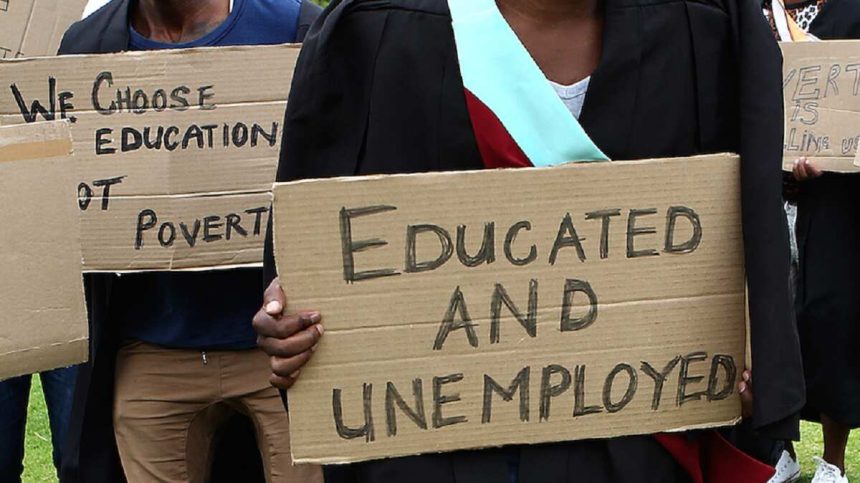
Local – Despite there being multiple avenues for social workers to be employed across government departments, nearly 9,000 qualified social workers in South Africa remain without work while more than a million learners struggle daily with trauma, abuse, poverty, and mental health crises.
The contradiction points to a deepening failure, one that leaves the country’s most vulnerable children without the professional support they urgently need.
Schools across South Africa are either without social workers entirely or share a single professional across dozens of institutions. Life orientation teachers have increasingly been pressed into a support role they were never trained for, while district-based social workers are stretched across 30 or more schools at a time, rendering meaningful intervention nearly impossible.
Asanda Boboyi, from the Department of Social Work at Walter Sisulu University, believes that the government is failing to adequately fund and deploy the very professionals it continues to produce. According to him, a funding structure that once absorbed graduates directly into government employment collapsed in the early 2010s, and the system has never recovered.
“Around 2010, 2011, 2012, we had a very good structured program with the DSD — Department of Social Development — where there was a need for social workers, and they were employed right after the accomplishment of their Bachelor of Social Work degrees. So it became a problem in 2012, 2013 upwards, where the Department of Social Development was no longer funding the social workers.”
A Profession in Exodus
The consequences of this funding withdrawal have compounded year on year, with newly graduated social workers entering a saturated and underfunded system. South Africa’s universities continue to produce graduates annually, but without absorption into the public service, those numbers only deepen the crisis.
Boboyi said many social workers have since sought opportunities abroad, draining the country of a critical professional resource. With no clear government plan to absorb the growing backlog of unemployed graduates, the exodus shows no sign of slowing.
“There are many social workers that are going abroad, they are in England, they are in Australia because of unemployment, and others have even opted to go teach in China or other Asian areas.”
Boboyi argued that school-based deployment, rather than the current district-office model, is the only approach likely to produce real results, and that without policy advocacy at the highest levels of government, the crisis will only deepen.
