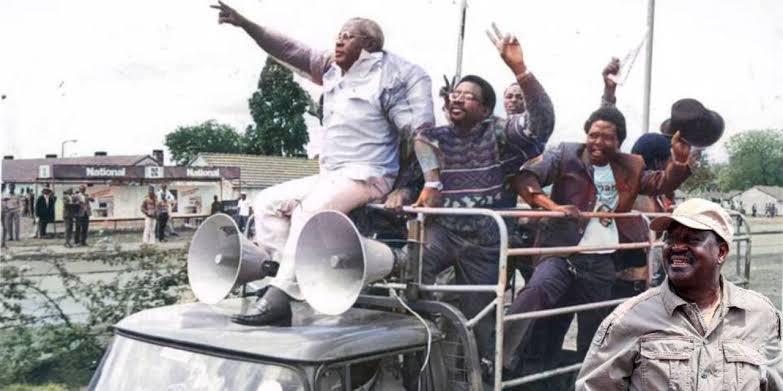
Kenya marked the 36th anniversary of the historic Saba Saba movement on 7 July with an unprecedented security operation that effectively shut down parts of Nairobi and other major urban centres.
The government said the measures were necessary to prevent unrest during planned demonstrations, while activists and legal groups argued that the operation unlawfully curtailed constitutionally protected freedoms through roadblocks, arrests and restrictions on movement.
The anniversary has become more than a symbolic remembrance of Kenya’s democratic struggle. It now reflects a broader contest over civil liberties, economic hardship and the state’s response to growing public dissent.
SMread: How we are trying to reclaim life amid rubble and fear in Gaza
From democracy movement to modern protest
Saba Saba, meaning “Seven Seven” in Swahili, commemorates the protests of 7 July 1990, when supporters of multi-party democracy defied a government ban under former President Daniel arap Moi. The demonstrations, centred at Kamukunji Grounds in Nairobi, were met with a violent police crackdown that left dozens dead but helped lay the foundation for Kenya’s democratic transition.
“On the 7th of July 1990, over 30 protesters were killed while trying to access various grounds across the country,” said Alex Kiarie, a Kenya-based journalist with The Standard Group, in an interview with Salaamedia. He added that the international pressure following the killings “pushed the then regime of Daniel arap Moi” to repeal Section 2A and reintroduce multi-party politics.
More than three decades later, the anniversary has evolved into an annual focal point for political mobilisation and public criticism of government policy.
That role expanded significantly after the youth-led demonstrations of June and July 2024, when widespread protests against proposed tax increases culminated in the storming of Parliament on 25 June. More than 100 people were reportedly killed in the weeks that followed, leaving a lasting legacy of mistrust between protesters and the state.
The first anniversary of those protests in 2025 proved equally deadly, with at least 41 fatalities reported during clashes between demonstrators and security forces.
SMread: HERMAN MASHABA: When politics takes precedence over governance, citizens pay the ultimate price
The 2026 security operation
Days before this year’s anniversary, authorities signalled a more assertive security response. On 6 July, Nairobi Regional Police Commander, Issa Mohamud, declared planned Saba Saba marches unlawful, arguing that organisers had failed to comply with notification requirements under the Public Order Act.
Before dawn on 7 July, the National Police Service established extensive checkpoints and roadblocks across Nairobi’s central business district and along major highways, including Thika Road and Mombasa Road. Razor wire barriers restricted access to key parts of the city, while reports emerged of plainclothes security personnel detaining activists before demonstrations could gather momentum.
Although businesses and transport services resumed on 8 July, civil society organisations continued to criticise what they described as excessive restrictions on movement and assembly.
Recalling the first anniversary of the June 2024 protests, Kiarie said a protester “was actually selling masks” when he “was presently shot dead under the glare of cameras and journalists,” highlighting how the demonstrations were closely witnessed by both the media and the public.
SMread: Could AI create a new form of inequality in South Africa?
The legal debate
The events have renewed longstanding disagreement over the relationship between Kenya’s Public Order Act and the constitutional right to peaceful assembly.
The right to peaceful assembly exists precisely because governments will, at times, prefer that people remain silent. Constitutional rights are meant to protect dissent, not convenience.
Article 37 of Kenya’s Constitution guarantees every person the right to assemble, demonstrate, picket and present petitions peacefully and unarmed.
Police authorities maintain that organisers must notify the authorities in advance so that adequate security arrangements can be made. Government officials argue that protests have previously resulted in violence, destruction of property and economic disruption, making preventative policing necessary.
Civil rights organisations dispute the interpretation that notification amounts to seeking permission. They argue that treating administrative notification as a mechanism to prohibit demonstrations undermines constitutional protections and allows the state to restrict lawful dissent.
SMread: YUSUF DINDAR: We have to start asking serious questions about FIFA
Economic pressures behind the unrest
The protests are unfolding against a backdrop of persistent economic strain.
President William Ruto’s administration has faced mounting pressure to reduce public debt through fiscal reforms, including tax increases linked to broader economic restructuring. Many young Kenyans argue that these measures have increased the cost of living while unemployment and inequality remain high.
Grassroots organisations, including the Economic Justice Movement and various Social Justice Centres, have linked calls for accountability over police conduct with demands for economic relief and greater government responsiveness.
A regional pattern
Kenya’s security response did not occur in isolation. Neighbouring Tanzania also imposed sweeping restrictions around the Saba Saba anniversary, banning political gatherings and deploying additional security forces after authorities cited alleged threats to public order.
The developments have prompted observers to examine whether East African governments are increasingly relying on pre-emptive security measures to contain political mobilisation before demonstrations can take place.
The events of this year’s Saba Saba anniversary illustrate the continuing tension between maintaining public order and protecting constitutional freedoms.
Supporters of the government’s approach argue that preventative security measures reduce the risk of violence and safeguard businesses and infrastructure. Critics contend that widespread roadblocks, targeted arrests and restrictions on movement risk weakening democratic rights by making peaceful protest increasingly difficult.
As Kenya moves beyond this year’s anniversary, the debate is likely to remain focused on where the line should be drawn between legitimate security concerns and the constitutional protections that Saba Saba itself helped secure more than three decades ago.
For more on this conversation, watch the interview below:
Image via Ni Sisi.
