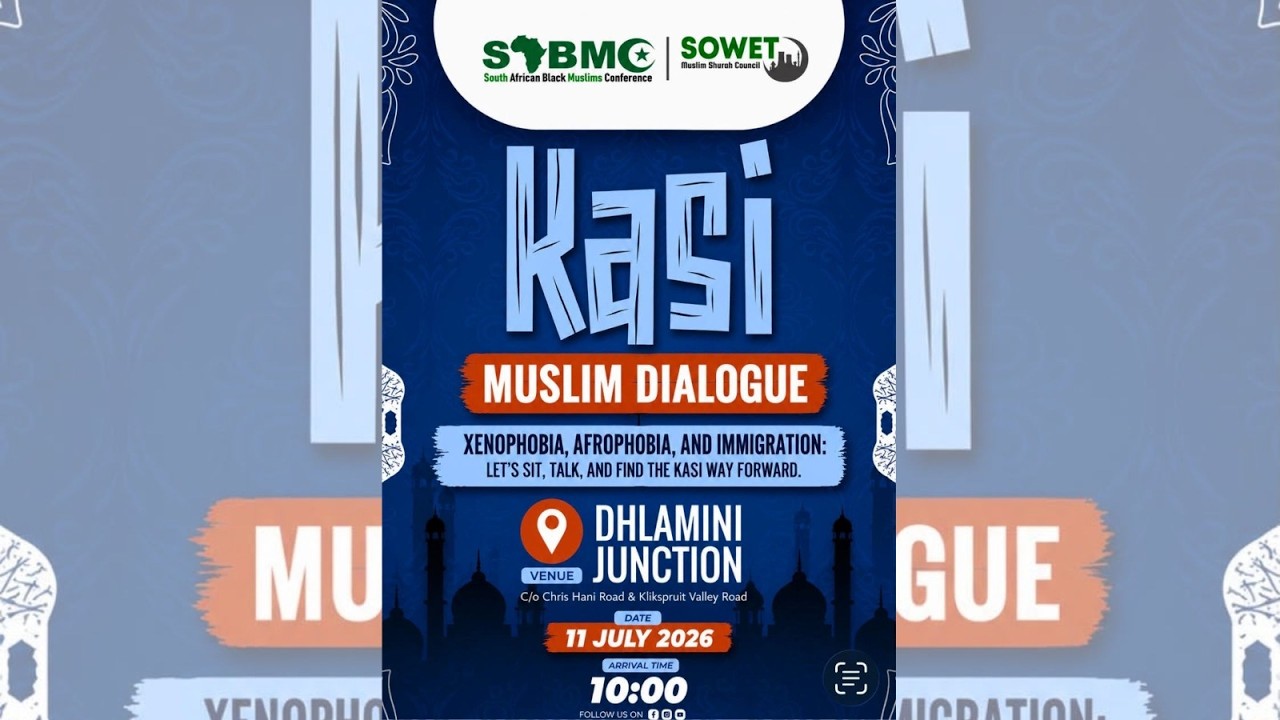
Local – Treasurer at the Soweto Muslim Shura Council (SMSC) and NEC member of the South African Black Muslim Conference, Imraan Maphatsoe believes that dialogue within the Muslim community can solve the divisions created by xenophobia, afrophobia and immigration tensions in South Africa’s townships.
Ahead of the launch of the Kasi Muslim Dialogue at Dlamini Junction in Soweto, Maphatsoe said people’s responses to foreign nationals are shaped by their individual experiences, which is why a collective conversation is needed.
“What we are trying to do with Muslim dialogue is to see if we find a common voice or one voice that can speak to the situation that we are faced with.”
Mistaken for Foreigners
A widespread misconception that Islam is an Indian and Malay religion has fuelled Islamophobia and the targeting of Muslims during recent unrest. Black Muslims living in townships are frequently mistaken for foreign nationals because of it.
Maphatsoe said the initiative, the first of many planned engagements, seeks to confront this perception by starting conversations within the community and beyond, so that Islam is understood as a religion for all people and not one tied to a single group.
“You have a wife that goes to work with a hijab and stuff, the first thing that happens is they don’t say, “he’s one of us”, they say he’s a foreigner immediately.”
An Indictment on Leadership
Damaging perceptions about Islam have taken root over many years, despite the freedom to practice religion openly in South Africa. Some of these could have been addressed long ago had communities been properly engaged.
Maphatsoe argued that Muslim leadership has failed to educate broader society about the faith and has left ordinary people behind on issues that affect them daily, something he believes calls for serious introspection.
“It’s an indictment on us for really not doing enough about teaching our people, making them understand what Islam is. Islam is not Indian. Islam is not Malay. Islam is not Arab.”
