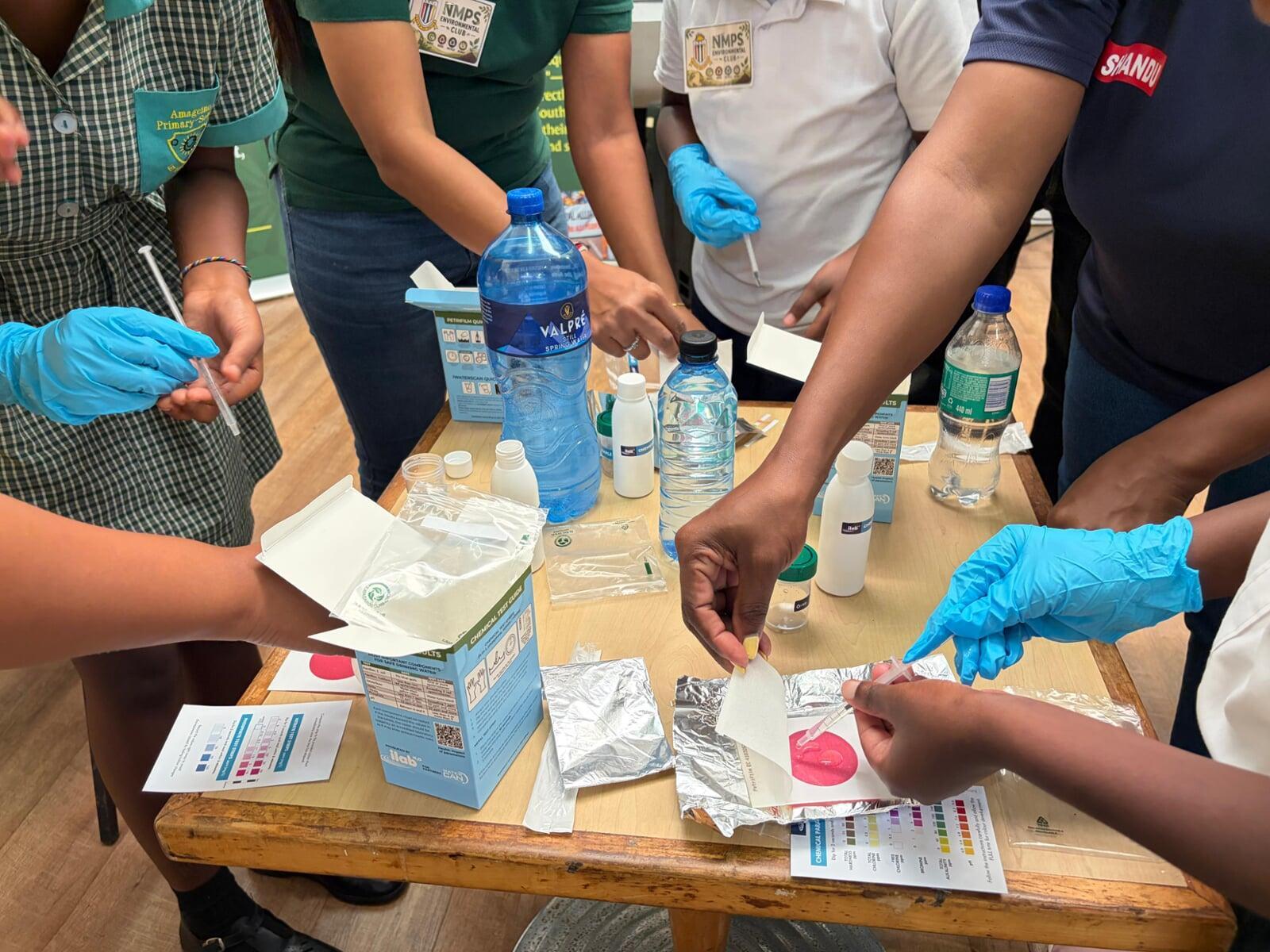
Image Source: WaterCan
Local – WaterCAN’s Nomsa Daele has urged Gauteng residents to test their tap water regularly, warning that visual clarity does not guarantee safety and that some community water samples across South Africa have shown contamination, including E. coli.
Daele said the organisation’s testing week, held from 14 to 18 September, aimed to give ordinary people the tools to understand what is actually in their water, rather than assuming it is safe because it looks clean.
“Water can look clean at the same time, but the problem is that you can’t see what’s really in your water. So that is why we at WaterCAN are encouraging communities, as well as your schools, ordinary people, to test their water,” said Daele.
Risk Levels Differ by Water Source
Water quality is not uniform across households, with some drawing from municipal taps while others rely on streams, boreholes and Jojo tanks that carry a higher risk of contamination. Communities dependent on open water sources such as dams and rivers are particularly exposed, since pollution levels there tend to be far higher than in treated tap water.
Daele explained that results vary depending on location and source, and said E. coli in tap water is a serious warning sign because it points to faecal contamination, which can pose severe health risks, particularly to young children.
“E. coli is an important warning because it indicates the water has been contaminated with faecal matter. So when you do find E. coli, we take it very seriously because contaminated water can cause severe health risks, especially amongst vulnerable people such as young children,” she said.
Infrastructure Blamed for Declining Water Quality
Sewage pollution, poorly maintained wastewater treatment plants and ageing pipe networks are placing growing strain on the water reaching South African households. Interruptions to water supply are compounding the problem, making it harder to guarantee consistent water quality across affected communities.
Daele added that ageing infrastructure is among the main factors behind deteriorating water quality nationally, and called for a longer-term shift in how communities engage with the issue rather than waiting for problems to escalate.
“The message from WaterCAN is let’s not wait until the problem becomes a crisis. Let’s rather test and monitor and let’s act very early,” she said.
