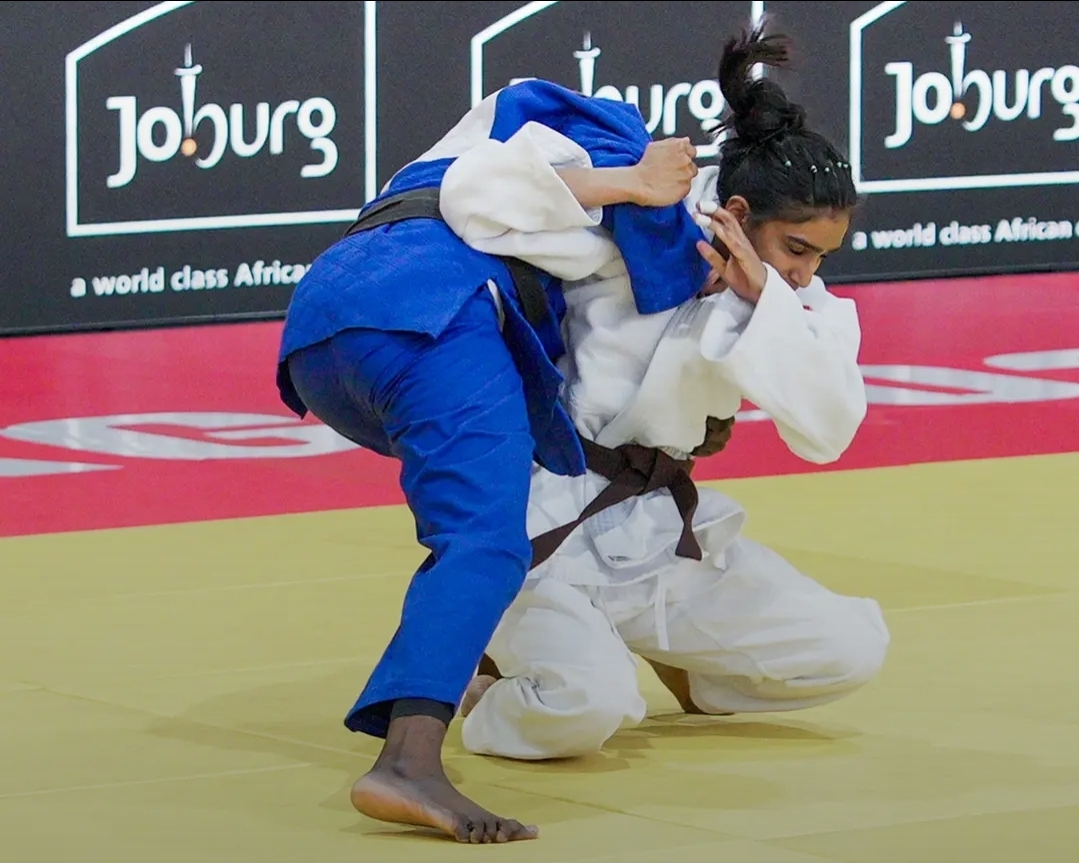
For Warda Ali, getting into judo was never only about finding a sport she enjoyed. It was about pursuing something she had been told was not meant for her.
Growing up as an athletic child, Warda was always eager to try something new. When her brother joined judo with his friends, she wanted to follow. There was one problem: her parents did not initially consider it an appropriate sport for a girl.
Rather than abandon the idea, she began attending training sessions without their knowledge.
Eventually, she told her mother that judo was what she wanted to do. This time, she received her support, wholeheartedly. Within months, Warda had entered her first beginners’ competition and performed well. It was the beginning of a journey that would take her beyond the expectations people had placed on her.
An important part of those early years was her coach, Mr Roberto Orlando, whose guidance helped develop her interest in competition. The more time she spent on the mat, the more she came to appreciate what judo demanded of her.
She describes falling in love with the sport because of how real it is, and because of the physical and mental strength it has given her.
SMread: Consumers are ‘lame ducks’ watching food prices climb
Finding her place in a male-dominated sport
In a way, pursuing judo also meant confronting the ideas people have about what Pakistani girls should and should not do.
Judo is a predominantly male sport, and training does require athletes to practise with the opposite gender. With limited female training partners available, this became a particular challenge within her family.
Her father was initially uncomfortable with the idea of his daughter training alongside boys. His concerns increased because of the comments from people around him who questioned why a girl would choose a combat sport.
The message was familiar. Almost every brown girl has heard something like this: fighting was not for girls, and she should leave it to her brother.
At first, her father did not even know she was training. But Warda continued to attend sessions, determined to improve. When she began bringing home medals, his attitude changed.
He could see that this was not a passing interest. His daughter was committed to the sport and had found something she genuinely loved.
And then one day, her father became one of her strongest supporters. Which isn’t to say that the opinions of others did not necessarily disappear, but he stopped allowing them to influence his response to her ambitions.
For Warda, that support was significant. She recalls how much it meant to have her father’s backing after initially having to pursue the sport without his knowledge.
SMread: DRC Ebola outbreak far from over, MSF warns
Letting her performance speak
As a Pakistani girl in a combat sport, Warda had to constantly navigate assumptions about her identity before people had even seen her compete.
She had to hear time and again that judo was not a sport for girls like her, and that she should be softer and more feminine.
For a woman trying to find a place in sport, these comments were hurtful. But as time went on, she started to recognise that the criticism had little to do with her ability and more to do with other people’s expectations of how a girl should behave.
Her response was to keep training.
Rather than spend her energy trying to convince everyone that she belonged in the sport, she focused on her own progress. As she explains:
“I stopped fighting for their approval and started fighting for myself.”
Interestingly, Warda says she never reached a point where other people’s opinions made her question her decision. She has always been strong-minded, with a clear sense of what she wanted to achieve.
SMread: Lesufi’s GBV plan looks perfect on paper, says Dr Shaheda Omar
Strength beyond the competition mat
The lessons Warda has taken from judo goes well beyond medals and competitions. Judo has been one of the best decisions she has made, both as an athlete and as a person. The sport has given her a sense of confidence and a routine built around something she genuinely enjoys. And it has changed how she approaches her own safety.
Through training, she has learnt to read situations, recognise potential danger and remain composed when she feels threatened. Judo has given her the confidence to respond without immediately panicking.
But one must distinguish self-defence from unnecessary confrontation. Training does not mean someone should attempt to fight an armed attacker. Instead, it can provide the awareness and ability to create an opportunity to escape.
For women in particular, she believes this knowledge matters.
Her involvement in martial arts has also grown beyond judo. Alongside training in the gym, she practises jiu-jitsu and coaches others. Being part of Kazuno Judo, a very well-known club under my current coach, Allardyce Fulton, who is the South African National Judo Coach.
It is a role that allows her to pass on lessons she learnt while finding her own place in the sport.
SMread: Global spotlight on the status of teachers
Becoming someone other girls can look up to
One of the most important parts of Warda’s journey is what it has come to represent for other people.
She speaks about young girls approaching her to say they want to be like her, or that they want to become as strong as she is, and parents telling her that watching her journey influenced their decision to let their own children try martial arts. “Knowing that my journey has inspired someone else to begin theirs, that’s what truly keeps me going.”
For Warda, it makes it worthwhile knowing that her decision to pursue something she loved has helped someone else consider doing the same. Being a girl should never be treated as a limitation on physical strength or the activities they choose to pursue.
She believes judo is accessible to people regardless of age or fitness level. One of its core principles is using an opponent’s force to one’s advantage, rather than relying on strength alone.
She understands that training can leave the body sore, and the early stages can be uncomfortable. But her advice is to keep trying and to allow a good coach to guide the process.
Whether women train in an all-female class or practise with a family member, she wants them to experience the confidence that comes from learning how to handle a physically challenging situation.
SMread: Detained in Syria, heard at the UN: The case of Bilal Abdul Kareem
A different idea of what it means to be a girl
Warda’s journey had started with a young girl who wanted to try the same sport as her brother, and it lead to a decision that challenged expectations within her family and community, eventually becoming a source of inspiration for others.
She doesn’t suggest that every girl needs to become a competitive athlete. Nor does she believe that strength is measured by how many medals someone brings home.
What matters to her is that girls are given the opportunity to discover what they are capable of, without being discouraged because a certain activity doesn’t fit someone else’s definition of femininity.
Her own advice to young girls captures this belief: “I want them to see that being a girl is strength.”
For the girls who approach her after training, her example offers a different possibility. They can be confident, physically capable and interested in a sport that has traditionally been dominated by men.
And for the parents who may still hesitate: sometimes, the best thing they can do is allow their children to try.
Warda once had to step onto the mat without her parents knowing. Today, she hopes the next generation of girls will not have to do the same.
