Image: The Citizen
Africa – Greenpeace Africa oil and gas campaigner Sherelee Odayar is calling on African governments and financial institutions to tax international oil companies operating on the continent. She said the revenue should go to communities affected by extreme weather events linked to climate change.
Odayar said governments should also strengthen environmental laws on fossil fuel emissions, reject oil and gas expansion and redirect resources to community-led renewable energy through the just energy transition.
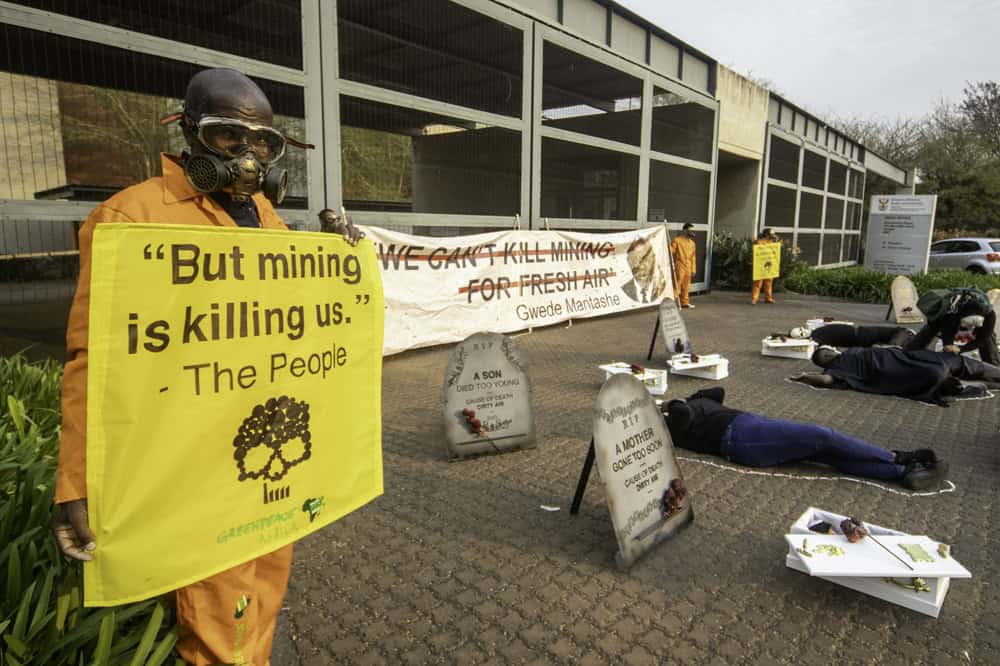
Her comments follow a protest by Greenpeace Africa and Extinction Rebellion activists outside African Energy Week in Cape Town earlier this week, where they demanded an end to new oil and gas exploration. Government and industry have argued that gas supports energy security and investment, while Shell’s plans to explore offshore blocks have become part of the dispute.
Odayar pointed to the Niger Delta, where she said oil companies had destroyed fishing and farming livelihoods, and to the East African Crude Oil Pipeline, which she said had displaced more than 13,000 people.
She said the polluter pays principle should be expanded. She said most countries already had the principle in place, but that it needed to go further to make polluters pay.
“We want the governments and financial institutions to tax the international oil companies that are taking the resources in their country. And then that revenue be directed back to communities that are reeling from the devastating impacts of extreme weather events.”
Questions Over Jobs
Supporters of new oil and gas exploration argue that it attracts capital and creates jobs in a country in urgent need of employment. The debate has raised questions about where to draw the line between economic growth and protecting the environment.
Odayar said workers brought in from overseas often filled skilled positions on rigs, and questioned whether new exploration would create lasting employment for South Africans. She said international oil companies must set out, as part of their social and environmental plans, how many jobs will be available to local South Africans.
“And the jobs that they present for locals are temporary. They’re not permanent employment. And we’re going to ask ourselves the question, is it worth the risk?”
The Cost of Renewables
The green transition also carries its own demands, requiring significant infrastructure, investment, land and minerals. Critics argue that this brings its own environmental and social costs.
Odayar said renewable energy developers must go through the same environmental impact assessments as any other project in South Africa. She said Greenpeace Africa did not want these developments to displace any communities.
“So we will hold the renewable energy companies to the same standard that we hold the oil and gas companies to. And yes, we do understand that renewable energy is expensive now but overall in the long run it’s actually going to cost less in terms of energy generation.”
She said renewable energy was expensive now but would cost less in the long run. She added that Greenpeace Africa was not anti-development, but that decades of oil and gas exports had not delivered for African communities.
