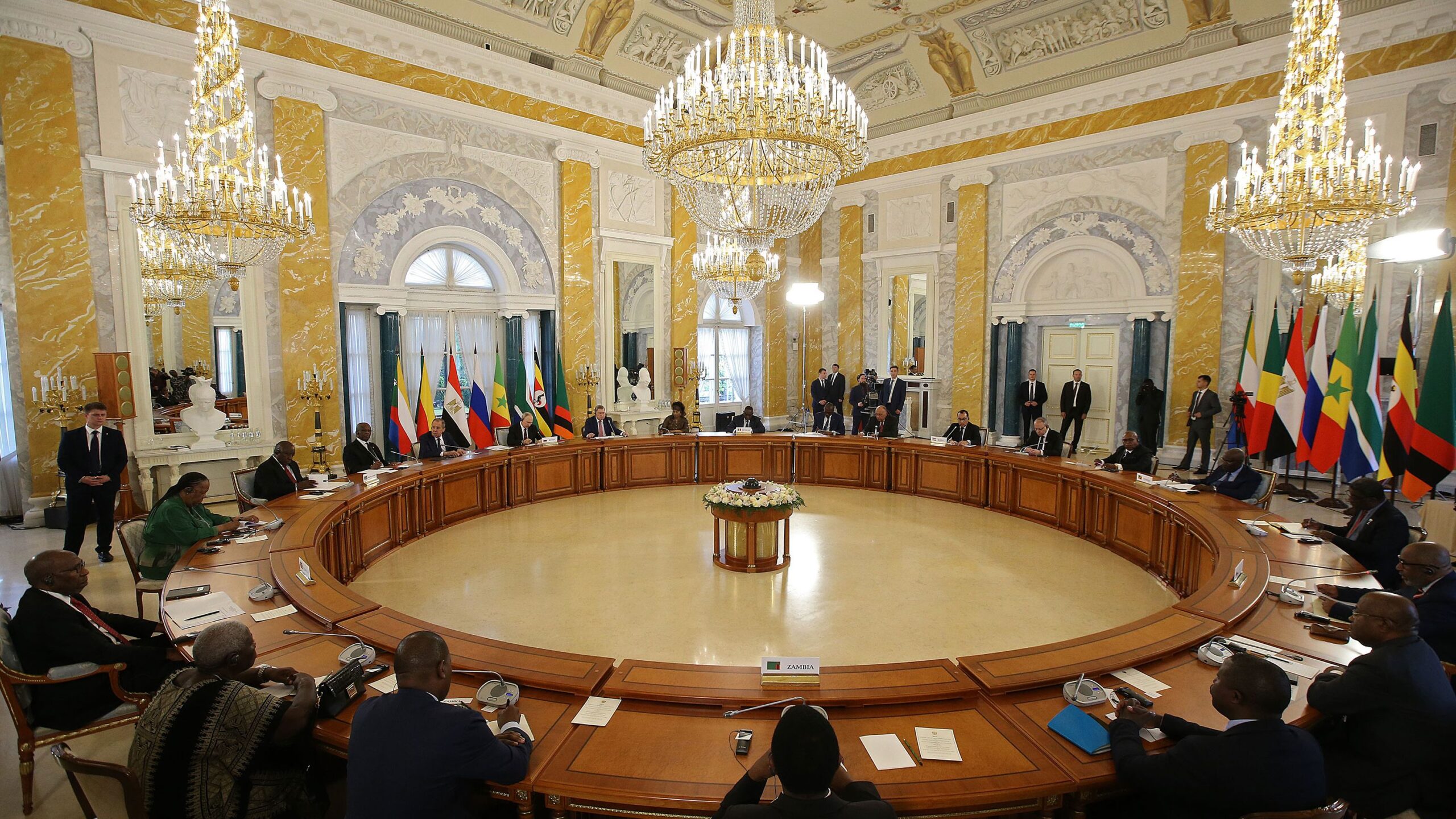
Photo by [CNN]
Returning from his visits to Russia and Ukraine, South African President Cyril Ramaphosa praised the African Peace Initiative as a significant endeavour to achieve a peaceful settlement between the two conflicting nations. Although reports indicated a “lukewarm” reception of the delegation in both Russia and Ukraine, President Ramaphosa remains hopeful the proposals presented will be taken into consideration by President Vladimir Putin and President Volodymyr Zelensky.
“This initiative has been historic in that it is the first time African leaders have embarked on a peace mission beyond the shores of the continent.”
President Ramaphosa led an African delegation that comprised leaders from Senegal, Comoros, and Zambia, along with the Prime Minister of Egypt and representatives from the Republic of Congo and Uganda. They travelled to Eastern Europe to mediate between President Putin and President Zelensky.
The proposal presented by the African delegation is a comprehensive ten-point plan that advocates for de-escalating the conflict, initiating urgent negotiations, and ensuring the security of both nations, among other points. Furthermore, the proposal emphasises the importance of upholding national sovereignty under the UN charter, releasing prisoners, and repatriating children to their places of origin.
While the Kremlin described the proposals as “difficult to implement”, they expressed President Putin’s interest in considering them. However, President Zelensky refused to hold peace talks with his Russian counterpart as long as Russian troops remained in occupied Ukrainian territory.
Are Russia and Ukraine Unwilling to Compromise?
Gideon Chitanga, a Research Associate at the African Centre for the Study of the United States at Wits University, anticipated no significant deviations in response to the African delegation’s proposal in Kyiv and St. Petersburg.
However, even though both parties needed more willingness to compromise, Chitanga stated the crucial point to consider is that the proposal presented by the African delegation is not substantially distinct from those previously put forward by other nations.
This similarity suggests the proposal already encompasses elements which have been recognised and can be relatively easily addressed in both the short and long term. Moreover, it establishes a foundation for fostering and developing dialogue.
“The African initiative is just the initiation of a process like others. But these initiatives provide a good basis to start a serious dialogue about the conflict and to convince the parties to start talking to each other. Possibly [address] those issues that can be quickly dealt with and going to the more complex issues.”
SMread| The Saudi Regime Exploiting Hajj and Umrah
Russia/Ukraine Negotiations are Inevitable
Chitanga stated we have reached a stage where mediators have put forth multiple proposals for the warring parties to consider and reflect upon. These proposals aim to establish a framework that can facilitate negotiations.
In his address to President Putin, President Ramaphosa emphasised the war cannot continue indefinitely and the conflict can be resolved only through negotiations and diplomatic measures. He highlighted Africa, like the rest of the world, has suffered adverse effects from the conflict, particularly regarding food and energy prices.
Chitanga commented that the complexity of this conflict lies in the self-interests of both nations and their respective allies. Nevertheless, he maintains that Russia and Ukraine will need to initiate a dialogue at some point.
“At the moment, the key players who are offering to mediate are throwing different points on the table, hence the various initiatives. As I’ve said, the African initiative, the Turkish -initiative, which was probably the first one- and the Chinese ten-point initiative are providing key points to get the conflict parties to start seriously brainstorming and engaging on what they can urgently deal with on the negotiating table. From these initiatives, what would likely emerge are potential points where conditions can be made and probably [lead to] eventual, substantial or direct negotiation.”
