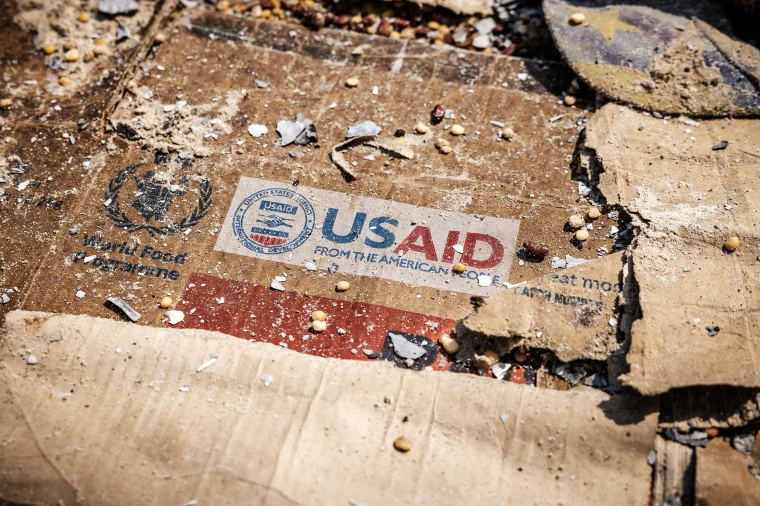
The official closure of the US Agency for International Development (USAID) has triggered a severe humanitarian crisis across East Africa, with aid organisations warning of mass starvation and a catastrophic reversal of public health gains. The funding cuts, part of a broader rollback of foreign aid by the Trump administration, have crippled the World Food Programme (WFP) and other vital services, leaving millions of refugees and vulnerable populations in a desperate situation.
A recent study published in the prestigious medical journal The Lancet projects that the deep cuts to USAID funding could lead to more than 14 million additional preventable deaths globally by 2030, with 4.5 million of those being children under five. Researchers described the potential shock to low- and middle-income countries as “comparable in scale to a global pandemic or a major armed conflict.”
Before being dismantled, USAID was the world’s largest humanitarian aid donor, providing over 40% of all global humanitarian funding. The agency’s programmes were credited with preventing an estimated 91 million deaths between 2001 and 2021.
SMread: Western Propaganda Fuels Violence in the Middle East
Refugees on the Brink
The impact is acutely felt in refugee settlements in countries like Uganda, which hosts 1.9 million refugees — the most in Africa. Six months into the US aid cuts, refugees who fled war in Sudan, South Sudan, and the Democratic Republic of Congo are now facing a new threat.
Iman Mohammed, a 30-year-old Sudanese refugee and mother of three in Uganda, told Anadolu Ajansı, “We have fled war, but we are now about to face starvation in Uganda.”
The WFP, which relied on the US for nearly half of its historic funding, has been forced to make drastic reductions. In Uganda, the number of refugees receiving WFP support was slashed from 1.6 million to just 663,000 in May. Those still receiving aid are getting severely reduced rations.
Alessandro Abbonizio, a WFP spokesperson in Nairobi, stated that moderately vulnerable refugees are receiving “just 22% of a food ration – the lowest ever provided in Uganda and the region.” The cuts coincide with a new surge of refugees fleeing renewed violence in neighbouring countries, placing an unbearable strain on already overstretched resources. The consequences of these devastating USAID cuts are profound.
The Institute for Security Studies (ISS) Africa reports that the abrupt cuts will not only increase poverty but also seriously damage attitudes toward the US. Data modelling by the ISS suggests the move could push an additional 5.7 million Africans into extreme poverty within the next year alone.
The economic fallout is also significant, with projections indicating that the economy of sub-Saharan Africa could be US$4.6 billion smaller by 2030 as a direct result of the aid reduction. The decision to halt funding has been widely condemned, with former US Presidents Barack Obama and George W. Bush criticising the move.
Obama called the gutting of the agency “a travesty, and it’s a tragedy,” while Bush highlighted the success of the President’s Emergency Plan for AIDS Relief (PEPFAR), a USAID-backed initiative credited with saving 25 million lives. The ripple effect of USAID cuts is being felt globally, as other major donors like Germany, the UK, and France have also announced plans to reduce their foreign aid budgets, compounding the crisis for the world’s most vulnerable.
Image: NBC News
