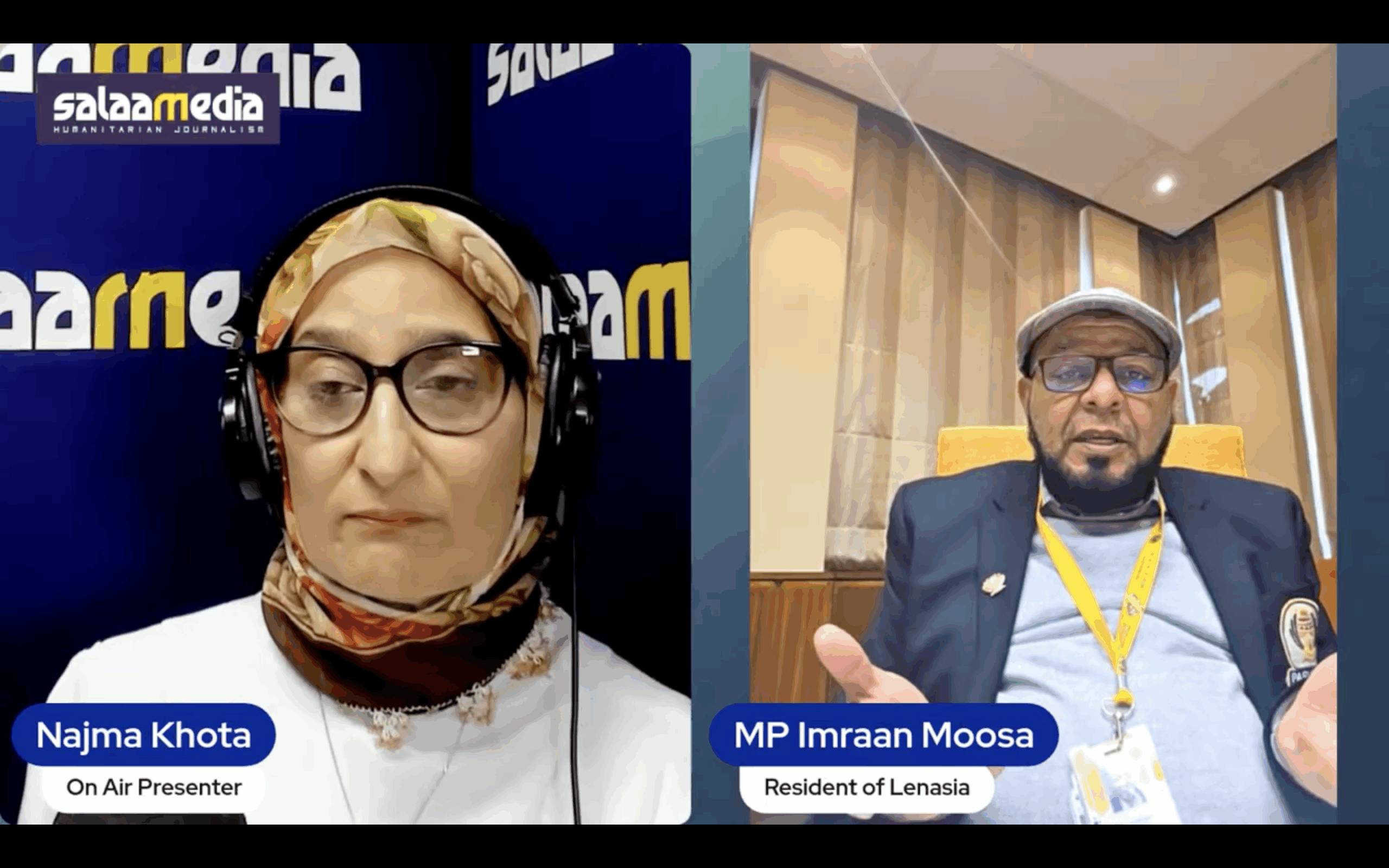
From the dusty football pitches of an apartheid-era Lenasia to the esteemed halls of the South African Parliament, Imraan Moosa’s journey is a testament to a life dedicated to community upliftment. His story is not merely one of political ascent, but of a deep-rooted commitment to being a servant leader, a principle he believes is the key to navigating the future.
Born and raised in Lenasia, Moosa’s formative years were shaped by the stark realities of the apartheid regime. He attended Park Primary and matriculated from Trinity High School, where his leadership qualities emerged early on. As the chairperson of the Student Representative Council (SRC) during the turbulent 1970s, he was at the forefront of student activism.
“It was during this time that more specifically some of my teachers and fellow students were locked up by the apartheid regime,” Moosa recalled in an interview with Salaamedia. He narrowly escaped arrest himself, a pivotal moment that led him to leave for Pakistan to pursue religious studies.
Upon his return, Moosa’s dedication to service continued, albeit in different capacities. He served as an Imam at the Nurul Islam Masjid and taught at various Islamic institutions. Driven by the need to support his family, he ventured into business but never lost sight of his community’s needs.
He recalls selling staple foods like bread at cost price “to ensure that they have food at home,” a practical response to the economic disparities he witnessed. This blend of faith, business acumen, and social conscience would become the hallmark of his public life.
A Mindset of positive change
Moosa’s transition into formal politics as a ward councillor for the Al Jama-ah party was a natural progression of his lifelong activism. He stepped up because he saw a community grappling with collapsing infrastructure, rising crime and a sense of neglect.
His primary goal was to change the community’s mindset from one of despair to one of positivity and empowerment. “When I came in as a councillor, I changed the mindset of Lenasia,” he stated, emphasising the importance of creating “a positive spirit within society.”
This meant being accessible and solution-driven. Residents knew they could reach him at any hour, whether it was for a burst pipe in the CBD — a persistent problem he successfully resolved — or more complex social ills. His approach is encapsulated in a motto featured on the Al Jama-ah party website: “it’s no use complaining, it’s time to be solution-driven”.
This proactive stance earned him the affectionate title of “Beloved Councillor” among residents, many of whom have shared testimonials praising his effectiveness and dedication.
Moosa sees Lenasia’s diversity as its greatest strength. Once a close-knit Indian community, it has grown into a multicultural hub. “I think today Lenasia is more diverse than ever… I think [this] is a diversity of our strength if we harness it with intention and respect,” he observed. He believes the town has transformed into an “economic hub of the south,” a significant evolution from its humble beginnings.
Now, as a Member of Parliament, Moosa aims to channel his extensive grassroots experience to influence national policy. He is acutely aware that the “serious issues at grassroot level,” such as infrastructure decay, budget constraints, and corruption, often get lost in the corridors of power. He hopes to be a voice for the voiceless, advocating for a more conscientious and accountable government.
He believes his purpose, and that of all leaders, is to be a servant leader, a role he has embodied throughout his remarkable journey. For Moosa, the work that began on the streets of Lenasia continues with renewed purpose in Parliament, driven by the same unwavering commitment to the people he serves, proving that dedication can indeed make a world of difference.
