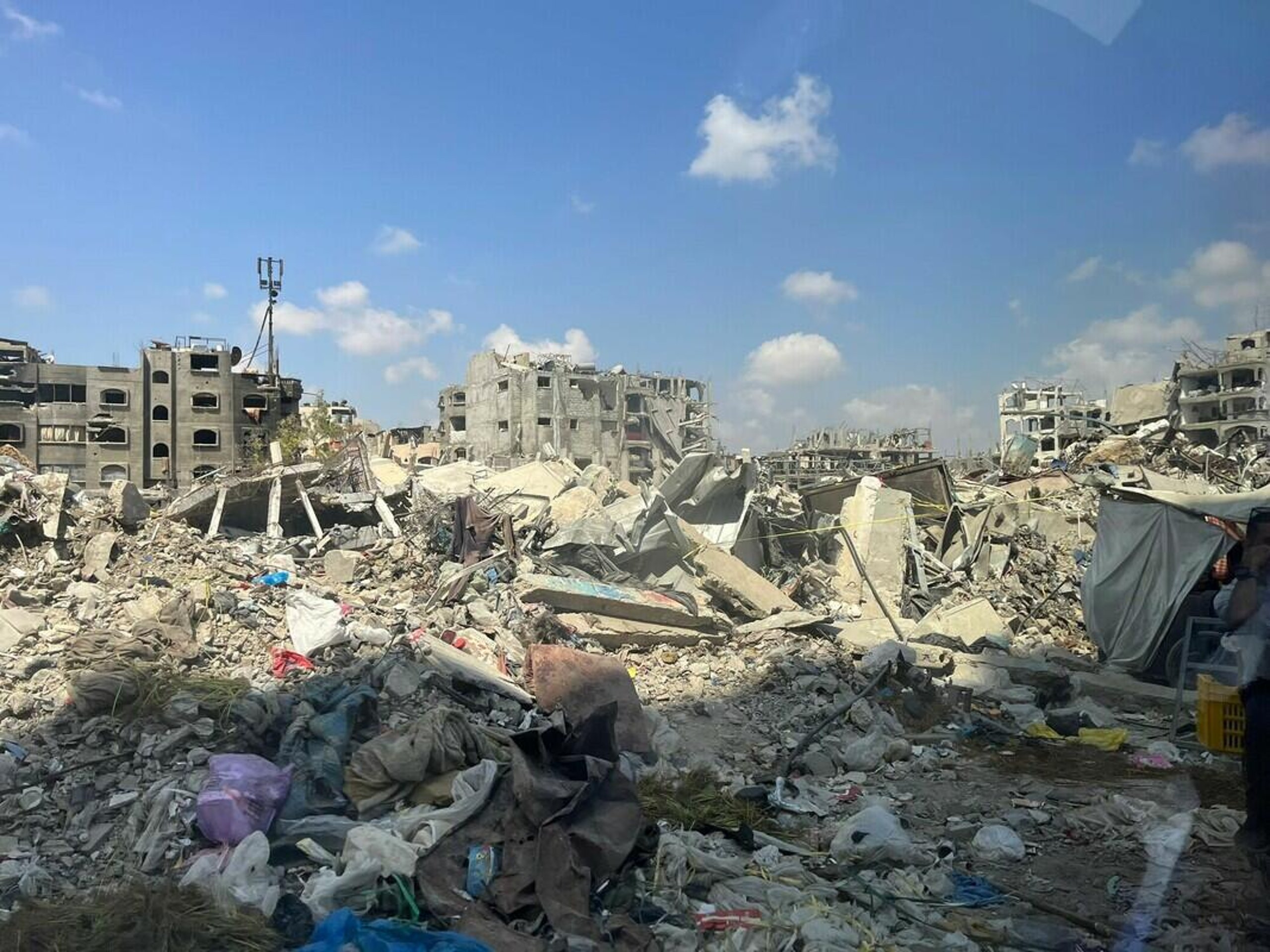
A groundbreaking report by leading Israeli human rights organisation B’Tselem has concluded that Israel is committing genocide against Palestinians in the Gaza Strip.
The report, titled Our Genocide and released this week, details a systematic and coordinated assault intended to destroy the Palestinian people as a group. This marks a significant moment, described by veteran Haaretz columnist Gideon Levy as a “turning point” and a “formative moment” for Israeli society.
The 88-page document, the result of 22 months of intensive research, documentation, and analysis, asserts that Israel’s actions fulfil the legal definition of genocide under the UN Convention. It outlines a policy of “destruction and annihilation” that intensified following the Hamas-led attacks on 7 October 2023.
According to the report, this policy includes mass killings, the deliberate destruction of living conditions through starvation and denial of humanitarian aid, forced displacement, and the systematic dismantling of Palestinian social and cultural life.
As of mid-July 2025, the assault has resulted in an estimated 58 026 Palestinian fatalities and 138 520 injuries in Gaza, with the report noting these figures are likely conservative.
SMread: Canada signals recognition of Palestine, joining European allies
A society’s conscience and complicity
The B’Tselem report goes beyond documenting atrocities, delving into the societal and political conditions that enabled them. Yair Dvir, a spokesperson for B’Tselem, explained that the report aims to understand “how a society became a genocidal society.”
It examines the long history of dehumanisation of Palestinians, the entrenchment of an apartheid system, and a culture of impunity that laid the groundwork for the current situation. “You cannot reach to a point that you totally destroy a whole population. You starve them, you kill them without a deep dehumanisation, which cannot happen in a moment,” Dvir stated during a panel discussion on Salaamedia.
Professor Heidi Grunebaum of the University of the Western Cape, also on the panel, emphasised the report’s power in placing responsibility not only on Israel’s political and military leadership but “also on the shoulders of the society as a whole.” She drew parallels to the role of conscience-driven organisations during South Africa’s apartheid, highlighting the courage required to “speak out against the government, against the leadership, against the military.”
However, the report’s reception within Israel has been muted. Gideon Levy condemned the Israeli media as the “biggest collaborator with the Israeli genocide,” accusing it of ignoring the report for commercial reasons and to please its audience. “This is part of the denial which enables the genocide,” Levy asserted, noting that the average South African has likely seen more of the reality in Gaza than an Israeli in Tel Aviv.
Dvir added that most of the Israeli public “even didn’t hear about” the report due to a media blackout, reinforcing the call for international intervention. “We need the help and we need the leaders of the world to stop only talking and start… to do action to stop the genocide,” he said.
The report, Our Genocide, details how the far-right Israeli government exploited the “collective trauma of 7th of October to fulfil its goals and its vision… of Jewish supremacy and the vision of transfer for the Palestinians.”
Professor Grunebaum noted the exploitation is not new, citing the “militarisation of the memory of the Holocaust” to justify actions against Palestinians, who historically had no role in the crimes committed against Jewish people in Europe.
B’Tselem warns that the genocidal practices seen in Gaza are at risk of expanding to the West Bank and other areas under Israeli control, where violence is also escalating. The report concludes with a stark moral imperative: “to acknowledge the facts, call them by name, stand with the victims, and demand an end to destruction and extermination while they unfold.”
The release of Our Genocide serves as a powerful call to action.
Image: Al-Nasser Street, in Gaza City. Credit: NRC
