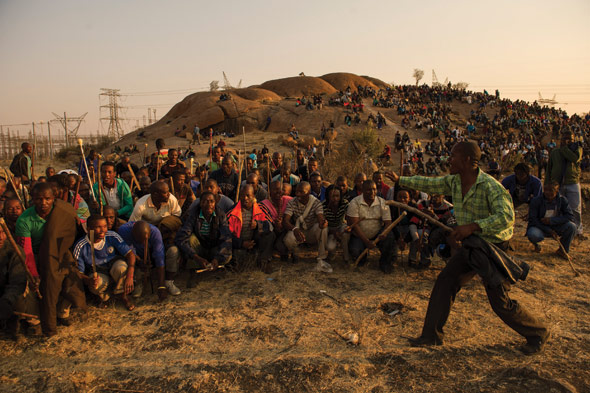
On 16 August 2012, police shot and killed 34 striking mineworkers at a platinum mine in the North West province. The incident, which occurred at the Lonmin mine, now owned by Sibanye-Stillwater, followed a week of escalating violence during a wage protest where ten others, including security guards and police officers, were also killed.
Despite a commission of inquiry, no one has been prosecuted for the deaths of the 34 miners. The continued lack of accountability has led to widespread condemnation from various sectors of South African society, who argue that the state has failed the victims and their families.
This anniversary highlights the ongoing struggle for what many see as a betrayal of post-apartheid democratic values, with the Marikana massacre remaining a painful symbol of unresolved state violence.
SMread: Young women activists bridge continents for change
Calls for accountability intensify
Thirteen years on, political organisations have renewed their calls for justice and accountability. The Economic Freedom Fighters (EFF) stated that the slain miners were “fathers, brothers and sons demanding a living wage” who were met with “the barrels of guns in full view of the world.”
The party criticised President Cyril Ramaphosa, who was a non-executive director and shareholder at Lonmin at the time, and the African National Congress (ANC) for what it terms a failure to deliver justice. Similarly, Build One SA (BOSA) has called for 16 August to be declared a national day of remembrance to honour the slain breadwinners.
The Association of Mineworkers and Construction Union (AMCU), which led the 2012 strike, expressed its feeling of betrayal over the government’s perceived inaction. AMCU President Joseph Mathunjwa described the state’s failure to prosecute as a “disgrace,” emphasising that the workers were not just numbers but individuals with families and identities.
The union also criticised the government for hosting a National Dialogue on the same day as the commemoration, viewing it as a sign of disrespect. The legacy of the Marikana massacre continues to fuel demands for systemic change within the mining sector and the justice system.
The Socio-Economic Rights Institute of South Africa (SERI) and the South African Federation of Trade Unions (Saftu) echoed these sentiments. SERI highlighted that while the National Prosecuting Authority (NPA) had previously cited resource constraints for the delays, years have passed with no significant progress.
While the government has paid over R350 million in compensation claims to victims’ families, critics argue that financial settlements cannot replace criminal accountability.
The unresolved nature of the Marikana massacre serves as a stark reminder of the deep-seated issues of inequality and injustice that persist in the country.
Image: Greg Marinovich
