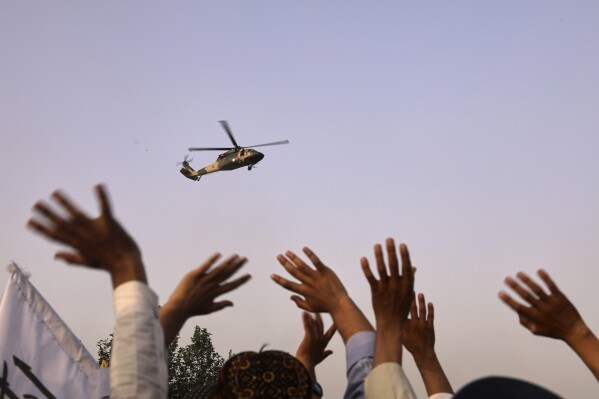
As the de facto government marked its fourth anniversary on Friday, 15 August 2025, the Afghanistan found itself at a critical juncture. It is facing widespread poverty and the strain of over 1.5 million Afghans returning from neighbouring countries this year alone, while the international community remains hesitant to release frozen national assets crucial for economic recovery.
The state of Afghanistan four years on reflects a country transformed, yet facing immense challenges.
SMread: Marikana massacre: 13 years with no justice
A tale of two realities
Domestically, the Taliban administration has made notable strides in specific areas. Professor Muhammad Haroon Khatibi, Chairman of the Humanitarian Assistance Society (HAS) for Afghanistan, acknowledged that “corruption is much less than it was before” and that security has improved “to a large extent”. The government has also been credited with curbing poppy cultivation, with Professor Khatibi estimating a 95 percent reduction.
However, these improvements are set against a backdrop of immense human suffering. “The poverty is almost over 90 percent of the Afghan people,” Professor Khatibi stated, a situation exacerbated by the freezing of Afghanistan’s reserve assets by the United States and other Western nations. This economic hardship is compounded by a severe drought and the continued danger of unexploded landmines from decades of war.
The humanitarian crisis has been intensified by a massive influx of returnees. Iran and Pakistan have expelled millions of undocumented Afghans, with the UN’s International Organization for Migration (IOM) reporting over 1.5 million have returned in 2025 so far. This places an enormous burden on a country where, according to the World Food Program, 3.1 million people are on the brink of starvation and international aid has been significantly cut.
SMread: Azhar Aziz-Ismail leads digital transformation in law
The ‘total exclusion’ of women
The most contentious aspect of Taliban rule remains its policies towards women and girls. Since retaking power, the administration has issued nearly 100 edicts restricting their freedoms. Girls are barred from education beyond the sixth grade, and women are banned from universities, most public sector jobs, and working for NGOs and the UN. Their access to public spaces like parks and gyms is prohibited, and they are required to have a male guardian for travel.
Professor Khatibi confirmed the reality of these restrictions, stating, “unfortunately in these issues of female education and restrictions against women in Afghanistan, unfortunately that is true.” He noted this is a primary factor forcing many families to flee the country.
While men-only anniversary celebrations, including “flower showers” from helicopters, took place in Kabul, women’s groups like the United Afghan Women’s Movement for Freedom staged indoor protests.
“This day marked the beginning of a black domination that excluded women from work, education, and social life,” their statement read. The situation has been labelled “gender apartheid” by the UN and led the International Criminal Court (ICC) to issue arrest warrants for supreme leader Hibatullah Akhundzada and chief justice Abdul Hakim Haqqani for crimes against humanity.
Looking ahead, the future of Afghanistan four years on remains uncertain. Professor Khatibi expressed cautious optimism, contingent on two key factors: the formation of an inclusive government that involves all Afghans, including women, and the release of the nation’s frozen assets.
“We need to rebuild Afghanistan and that needs all the power, all the capacity of all Afghans,” he urged. Without these, the nation risks remaining mired in a cycle of crisis, despite gains in security and governance. The path is fraught with both peril and potential, dependent on the choices made both within its borders and by the global community.
Image: AP
