The African National Congress (ANC) in the Western Cape has intensified its criticism of the Democratic Alliance (DA)-led provincial government over its R195 million trade relationship with Israel, a policy the opposition labels a “major conflict of interest” with South Africa’s pro-Palestine foreign policy.
However, national trade data reveals a more complex reality, showing that South Africa continues significant trade with Israel, including coal and arms components, complicating the political standoff at the provincial level.
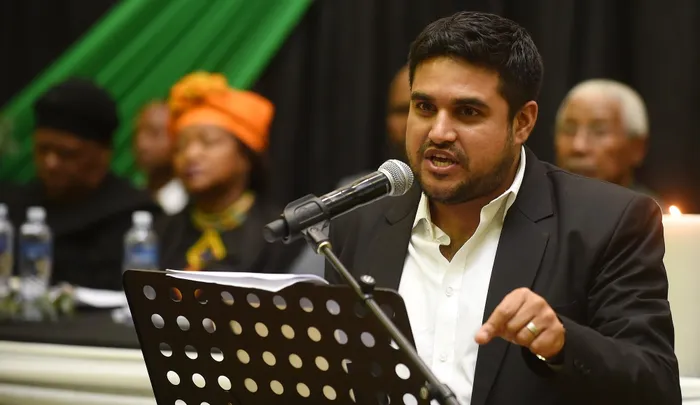
Khalid Sayed, the ANC’s Leader of the Opposition in the Western Cape, argues that the province is acting in defiance of national policy. “The stated government position is that of solidarity with the people of Palestine, it’s a national position,” Sayed stated, highlighting South Africa’s case against Israel at the International Court of Justice (ICJ).
He accused the Western Cape government of being “completely oblivious to the genocide that’s happening in Gaza and which deliberately ignores the stance of national government on the matter.”
However, this provincial dispute unfolds against a backdrop of continued national economic ties. According to an analysis by Pass Blue, South Africa’s coal exports to Israel have persisted, even growing 17 percent in January 2025 compared to the previous year. This coal, the report notes, helps fuel Israel’s complex artificial intelligence systems used in its military operations.
SMread: Gaza famine a man-made disaster
A complex web of arms and allegiances
The nuance extends to the arms trade. While South Africa officially banned direct weapons sales to Israel in 2004, a 2024 investigation by Open Secrets revealed that South African arms companies, with government approval, sold R3.3 billion worth of arms in 2023 to key Israeli allies like the US and Germany.
The report highlights the risk that the fact “South African-manufactured weapons are not directly exported to Israel does not mean they are not being used by Israel.”
This complex trade relationship reflects deep-seated historical and political divisions within South Africa. The ANC’s pro-Palestine stance is rooted in its historical alliance with the Palestinian Liberation Organisation (PLO) and the perception of a shared struggle against apartheid.
SMread: Palestinian archeologist set to return to SA
Provincial pressure versus national policy paralysis
In the Western Cape legislature, the ANC, alongside parties like the EFF and Al-Jamaa, has attempted to pass motions for a “clear condemnation of the occupation, of the genocide, of the atrocities by Israel,” but, according to Sayed, the DA “point blank refuse, they don’t even allow a debate.”
The ANC now plans to “confront the Premier directly on the matter,” demanding that the provincial government “cut off those particular trade ties with apartheid genocidal Israel.”
This provincial confrontation highlights a significant disconnect. While the ANC criticises the DA’s provincial trade, national government officials appear unable or unwilling to halt the flow of goods like coal. This leaves private companies, using state-owned port infrastructure, to continue the trade, creating a picture of a national policy that is clear in rhetoric but deeply contradictory in practice.
Image: Khalid Sayed. Credit: The Star.
