Image Source: Good Things Guy
Local – There are still many communities in South Africa where girls miss school, not because of a lack of ambition or ability, but because they lack access to basic sanitary products.
Period poverty continues to disrupt education, undermine dignity and affect the well-being of young women across the country. One community-led wellness initiative is working to shift that reality.
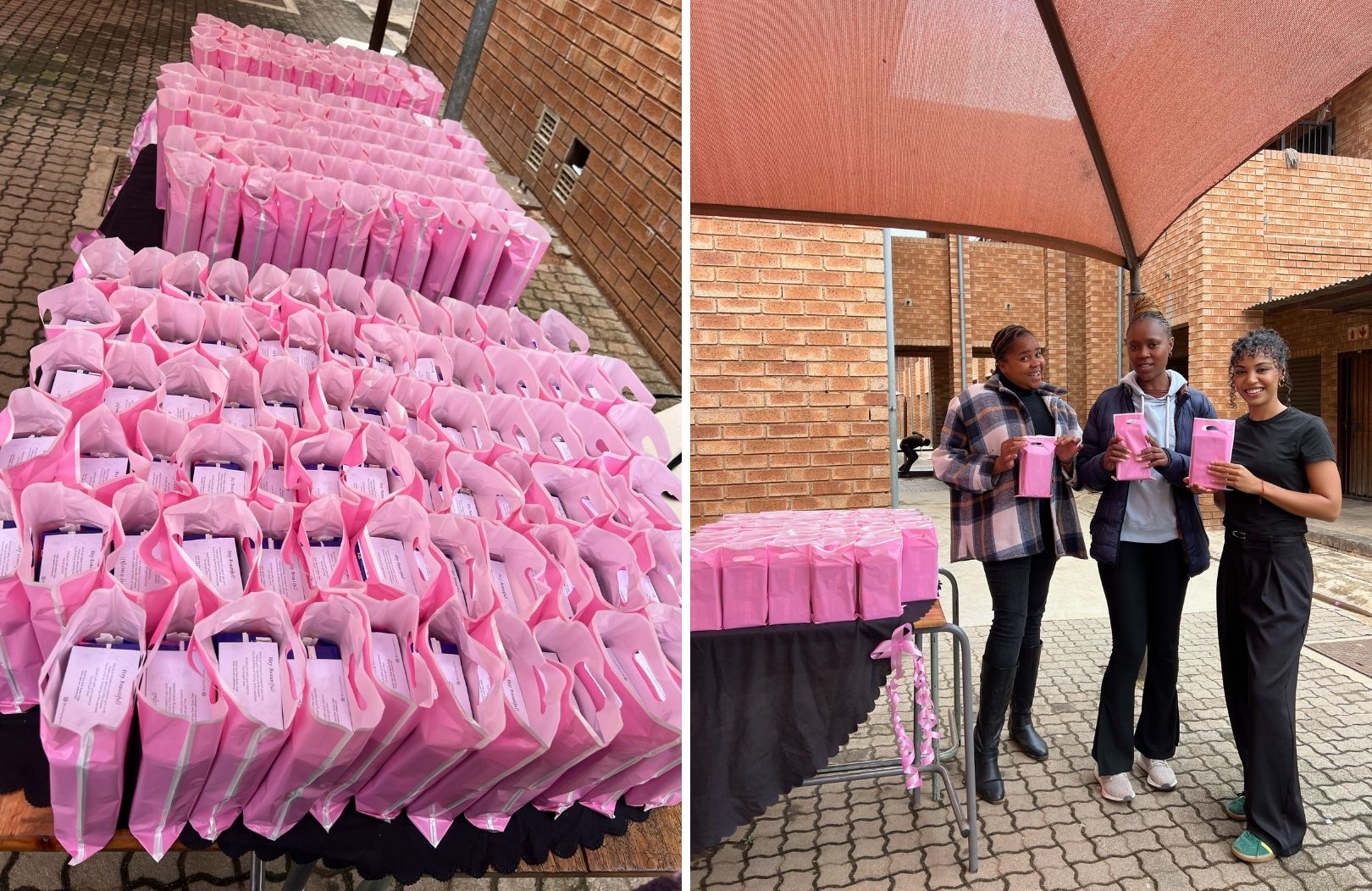
Kyma Yoga Flow, a women-centred wellness organisation, recently transformed a themed yoga class into a pad drive that resulted in 360 packs of sanitary pads being repackaged into 180 care packs and delivered to matric learners at Ivory Park Secondary School ahead of their final exams.
The initiative was founded by entrepreneur Chevonne Ramharuk. What began as a deeply personal healing journey later grew into a business rooted in emotional safety, reconnection and collective care for women.
Ramharuk said her entry into yoga came during a period of emotional survival, when she was searching for stability and grounding in her own life.
She explained that the experience gave her the mental clarity to reflect not only on her own healing, but on the silent struggles faced by many other women.
“For the first time, I felt like I had the capacity to breathe, think and feel like myself again. And I remember thinking if I feel this way, how many other women must need the same thing?”
As Kyma Yoga Flow expanded, Ramharuk said her vision evolved beyond individual wellness sessions. She began intentionally weaving charity into every event so that healing would extend past those physically present in the room.
She explained that this dual-purpose model allowed both participants and beneficiaries to feel supported through a single shared effort.
“Women would benefit from a single event, whether they are in the room with me or receiving support through our outreach programs.”
Ivory Park Secondary School was selected after the scale of need within the community became evident. Ramharuk said many learners struggled to access menstrual products, which directly affected confidence, attendance and overall academic performance.
She further explained that stigma surrounding menstruation created an additional psychological burden for young girls navigating adolescence.
“There’s so much shame around periods that girls don’t end up going to change their pads or even having pads to change into, which affects their health and their school attendance and academic performance.”
The pad drive was never intended to be a once-off intervention. Plans are now underway to expand the initiative to rural schools facing similar challenges.
She confirmed that the next phase of outreach is targeted for the mid-2026 examination period.
“For the future, we’re planning to reach rural schools just before the June 2026 exams… and how to add wellness to that.”
Ramharuk said the response from learners, teachers and the wider community affirmed the importance of the work. She described the experience as proof that when communities unite, dignity and opportunity can be restored through collective care.
