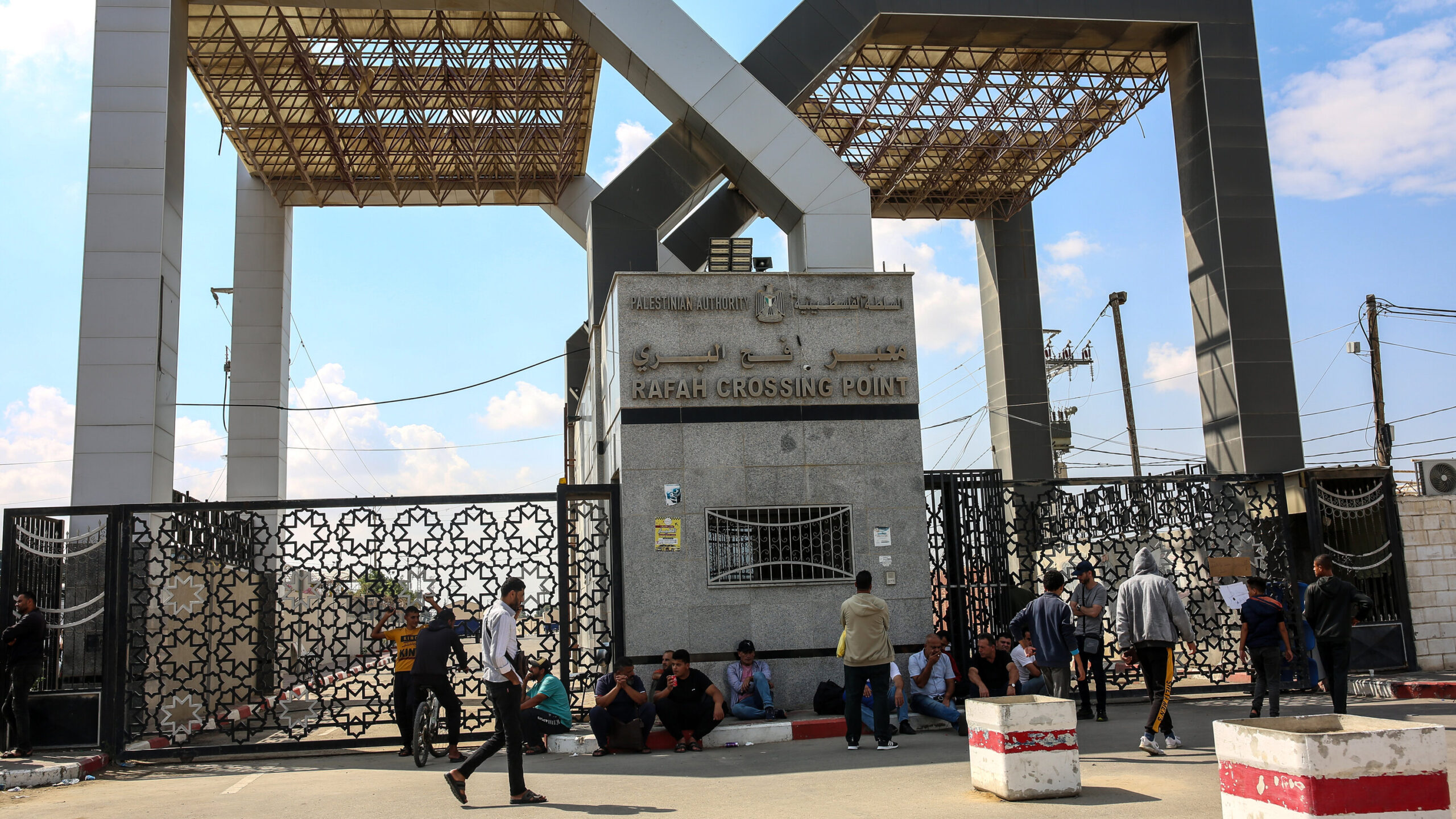
The Rafah border crossing partially reopened on Monday at 9:00 AM, marking the first time the terminal has processed travellers since it was seized by Israeli forces in May 2024.
Despite the reopening, only five patients were permitted to leave Gaza for Egypt, a figure that stands in sharp contrast to the estimated 20,000 Palestinians currently requiring urgent medical intervention.
This development occurs as Gaza’s medical infrastructure remains in a state of near-total collapse, with 94% of the territory’s 36 hospitals, including major facilities like Al-Shifa and Kamal Adwan, reported as damaged or destroyed.
SMread: Humanitarian aid blocked as Israel bans MSF
The human toll on the healthcare sector has been substantial, with more than 1,500 healthcare workers killed since October 2023. These conditions led the international medical organization Doctors Without Borders to describe Gaza as a “mass grave for Palestinians and those trying to provide assistance”.
While 150 hospitals and 300 ambulances remain on standby on the Egyptian side to receive the wounded, the rate of evacuation has not yet matched the available resources.
The security situation also remains volatile; despite a ceasefire agreement reached in October 2025, strikes killed four Palestinians on Monday, bringing the total casualties since the agreement to 524 killed and 1,360 injured.
In a recent interview with Salaamedia, Jenin-based journalist Osama Nazzal provided a scathing assessment of the humanitarian reality on the ground. Nazzal argued that there is a profound disconnect between diplomatic rhetoric and the conditions faced by civilians, stating that Israel was “declaring to the media and to the world something and doing something completely the opposite on the ground.” H
e offered a bleak description of the territory’s current state, remarking, “Gaza is a wasteland; no hospitals, no schools, no homes—nothing at all.”
Nazzal further criticised the limited scope of the current evacuation efforts, emphasizing that the number of people being permitted to leave is statistically insignificant compared to the broader crisis. He noted that even a significant increase in the daily quota would fail to address the scale of the need.
“Even if they allow 150 Palestinians to leave, this is not adequate at all,” Nazzal stated. “We are talking about 20,000 people in urgent need for medical treatment and other tens of thousands who are also in need for medical treatment but not urgently.”
As the crossing remains only partially operational, the international community continues to monitor whether the volume of medical transfers will be expanded to meet the thousands of critical cases still awaiting passage.
Image via The New York Times.
