In an era where the significance of early learning is gaining global recognition, South African experts are championing a more profound, passion-driven approach to Early Childhood Development (ECD).
Khadijah Lenda Sibanyoni-Muzei, chairperson of the South African Visionary ECD Forum, emphasises that the first thousand days of a child’s life are “very, very, very important” and that a holistic education is essential for setting them up for future success.
This sentiment aligns with global findings, such as those from the World Bank, which highlight that quality education is a strategic priority for development, helping to lift communities out of poverty.
Speaking to Salaamedia, Sibanyoni-Muzei, who is also the founder of Little Stars Preschool and Alberton Stars Private School, explained that the perception of ECD has shifted dramatically.
“Back in the day, ECDs were known to be babysitting facilities,” she said. “That era has changed drastically.” She credits the South African government for its increasing involvement and support, which includes motivating practitioners to become qualified and increasing subsidies. “We’re not allowed to take unqualified teachers anymore,” she noted, highlighting a move towards professionalising the sector.
SMread: HRW: U.S. weapons used to bomb sheltering Palestinians in Gaza
The foundation of lifelong learning
Sibanyoni-Muzei argues that a child’s development is multifaceted, encompassing emotional, psychological, and cognitive growth. “I believe strongly that a child is not just a physical being,” she stated. “If all that is developed properly, then that child is set for life. That child can strive in big school, that child can strive in tertiary education.”
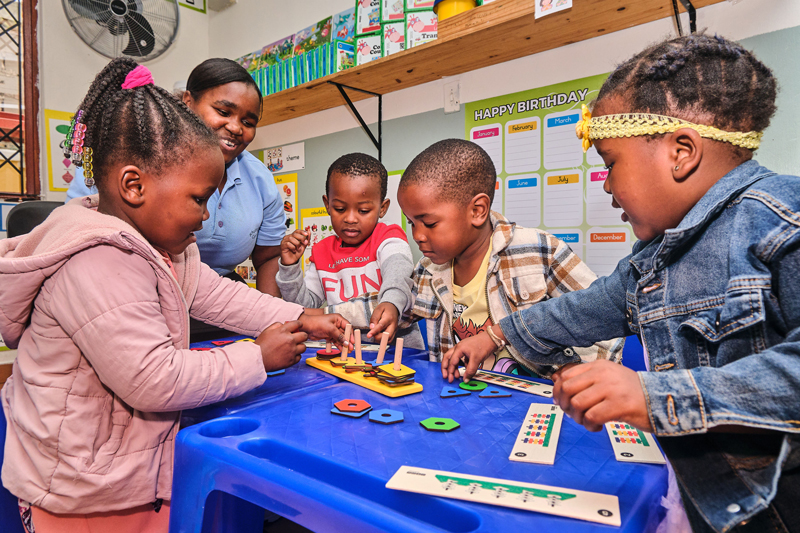
This approach to a holistic education involves moving beyond rote learning. At her centres, children engage with various “little learning corners,” such as fantasy or block construction areas, which introduce foundational concepts like mathematics through play. This method ensures that a child is stimulated across all developmental areas, rather than focusing on a single one.
A significant challenge, however, is the lack of parental understanding regarding the importance of early stimulation. Sibanyoni-Muzei has observed that many parents delay sending their children to a formal learning environment until they are ready for Grade R.
“I believe by that time, it’s pretty much a bit too late because not every child is the same,” she warned. This delay can mean that crucial developmental milestones are missed, and children are not exposed to the social environments necessary for their growth.
Her advice to aspiring ECD centre owners is clear: prioritise passion and compliance over profit. “If you’re going to look at the money, then you’re in the wrong field,” she asserted, describing the work as a “calling.” She stresses the importance of being fully registered and compliant to ensure the safety and well-being of the children in care.
The push for a quality, holistic education from the earliest stages is a cornerstone of building a stronger future for the nation’s children. It is meant to ensure they are equipped not just with knowledge, but with the full range of skills needed to thrive in a complex world.
Image via Grow ECD.
