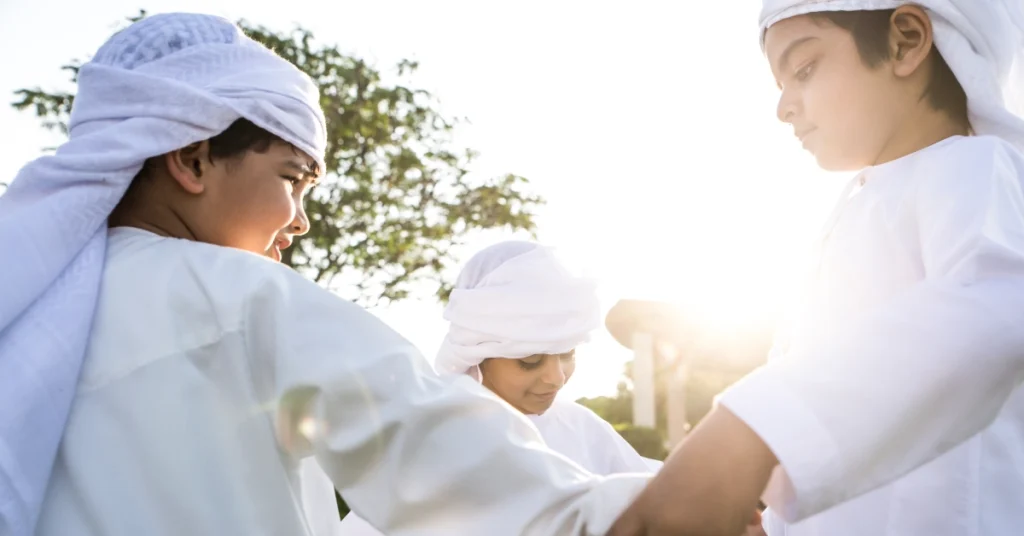
For many adults, Hajj is remembered as something immense. A spiritual obligation layered with emotion and sacrifice. But for children, especially those still learning the language of Islam, it can feel abstract. They hear stories about Makkah, see family members preparing for pilgrimage and watch emotional farewells unfold without fully understanding why it matters so deeply.
Waheeda’s children’s book, My Mini Hajj, translates the process of Hajj into something tangible. Something a child can walk through, colour in, taste, play with and remember.
At a time when many educational tools compete for children’s shrinking attention spans, My Mini Hajj succeeds by doing something deceptively simple. It meets children where they already are.
SMread: No ceasefire, no food, no end in sight for Sudan
Making spiritual concepts feel real
Children do not naturally connect to abstract ideas through explanation alone. They connect through movement, repetition, imagination and sensory experience. Waheeda understands this.
In schools across South Africa, she recreates parts of the Hajj experience in ways that feel immediate and accessible to young learners. Children circle classrooms to mimic tawaf around the Kaaba and even Zamzam water becomes part of the learning experience.
For many children, tasting it for the first time transforms a distant religious concept into a memory attached to emotion. Wonder. Curiosity.
It is easy to underestimate how powerful these moments can be. Adults often assume children need more information when, in reality, they need more connection.
SMread: The war against Rohingya women is still happening
The importance of interactive education
There is a growing conversation globally around how children engage with religion in modern environments. Traditional teaching methods still matter, but younger generations absorb information through interaction rather than instruction.
My Mini Hajj has an accompanying activity book which includes puzzles, mazes, matching games and colouring pages designed specifically for children aged five to nine. They allow children to build familiarity with Islamic rituals without pressure or intimidation.
The educational value lies not only in what children learn, but in how they feel while learning it.
SMread: Foreign nationals seek safety in Durban
Teaching values beyond rituals
Throughout her school visits and readings, Waheeda consistently returns to values like patience, gratitude, unity and togetherness. Not as abstract moral lessons, but as practical habits children can recognise in everyday life.
Patience becomes learning to pause and say alhamdulillah during difficult moments.
Unity becomes understanding why millions of Muslims move together during Hajj as one collective body, regardless of nationality, race or language.
These lessons feel especially relevant in a world where children are growing up surrounded by constant overstimulation, individualism and social fragmentation.
SMread: South Africa’s broken promise: how service delivery failures are breaching the social contract
Identity, belonging and representation
For Muslim children growing up in diverse school environments, religious identity can sometimes feel complicated. There is often an unspoken pressure to minimise differences in order to fit in comfortably.
Part of what makes My Mini Hajj resonate is that it does the opposite:
It encourages children to understand and celebrate their Islamic identity openly.
Representation in childhood shapes how children understand themselves long before they have the language to explain it. When children see their traditions reflected positively in books, classrooms and shared experiences, they internalise a sense of belonging rather than otherness.
At the same time, the programme also creates opportunities for cultural understanding among non Muslim peers. In diverse school settings, these conversations help dismantle stereotypes early, replacing unfamiliarity with empathy.
It is difficult to fear what you have been taught to understand.
A different kind of educational resource
Waheeda also provides calendars for children to track when parents or grandparents leave for and return from pilgrimage. It is a small gesture, but one that acknowledges how emotionally significant Hajj can feel within a family structure.
The project understands that children do not experience religion in isolation. They experience it through relationships, routines, emotions and memories.
That understanding gives the work a kind of emotional intelligence many educational resources lack.
My Mini Hajj is only the beginning.
Waheeda plans to expand the series to cover other pillars of Islam, including books focused on charity and salah. If the first project is any indication, these future releases will likely continue blending storytelling with hands-on learning in ways that feel modern without losing spiritual depth.
Too often, religious education for children swings between rigid formalism and excessive simplification. My Mini Hajj avoids both extremes. It treats children seriously enough to engage their minds while still understanding the importance of play, imagination and emotional connection.
And perhaps that is why the project feels so impactful. It recognises something many adults forget. Children are not disconnected from spirituality. They simply experience it differently. Sometimes all they need is a story, a classroom walk around the Kaaba, or a sip of Zamzam water to begin understanding something so impactful.
Learn more about Waheeda and My Mini Hajj below:
Image via Duaa Guides.
