Ideas have consequences. Sometimes they remain confined to opinion pages, and sometimes they shape the way people begin to see their neighbours.
In January of this year, Grant Arthur Gochin published an opinion piece titled “Africa Must Fragment, South Africa First.” Four months later, he returned with “The Necessary Fragmentation of Africa.”
Although different in emphasis, both articles have identical premises: Africa’s future lies not in strengthening shared national identities, but in breaking existing states into smaller ethno-cultural entities.
One line in particular caught my attention: “Africa’s borders were not drawn by African consent. They were drawn by empire.” Given our history, this statement carries some weight.
Colonial borders were indeed imposed with little regard for existing communities, and now that legacy continues to shape politics across the continent.
The deeper questions, at present, are whether fragmentation is the answer, and whether the reasoning that Gochin used is ethical enough to be taken as an example.
As he mentions in his article: “Israel was not built by waiting for permission…Israel is the empirical proof that a stateless people who organize, document, build, and refuse to disappear can secure recognition the world had withheld for two thousand years.”
Can we, as a country, build something based on the premise that it belongs to us? Have we been promised a land that can make space for no one else?
SMread: ANALYSIS | R600m spent, but are we safe?
The different kinds of fragmentation
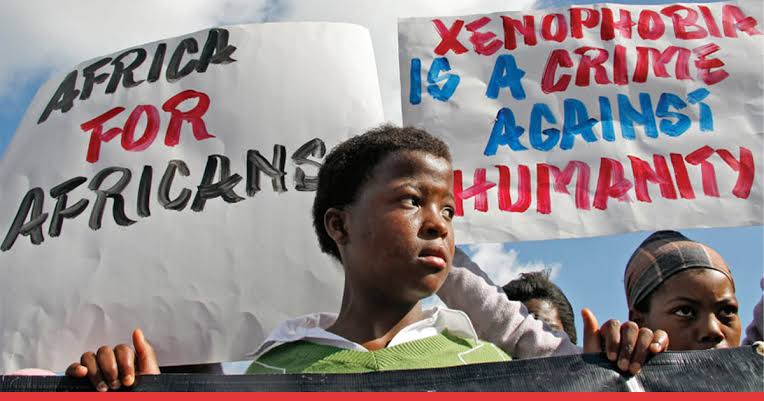
South Africa is already living through one form of fragmentation. Not a constitutional one, but a social one. Communities are divided between citizens and foreigners. African against African. We have been split into “us” and “them” over the past few weeks.
Shops are looted because they belong to migrants. Families flee because they speak with a different accent. Entire communities are being called outsiders despite sharing the same continent, and often the same history of colonial dispossession.
Keeping that in mind, arguments that political separation is the natural solution to historical injustice should be scrutinised.
Who are we fighting? Our past, or our present? Who gets hurt in the process? And even more so, who benefits from a divided Africa?
SMread: Teixeira: SA in better position than 2021 ahead of June 30 deadline
The lessons history has already taught us
Belonging to an Indian ethnicity, and as a South African citizen, my focus goes back to the British Empire. British administrators in India didn’t invent religious and cultural differences. They institutionalised them.
Communities were then categorised and governed based on those differences. Historians continue to debate the extent of Britain’s responsibility for Partition. But if one thing’s for sure, colonial governance reinforced divisions that became politically explosive.
Historian Yasmin Khan spoke of how partition didn’t come out of nowhere. It was the sum of decades of political division.
That is the danger of ideas centred on separation. They may begin as constitutional arguments, but they don’t stop there.
Democracies aren’t built by eliminating differences. They’re built by learning how to live with them. As Nelson Mandela said: “We can only succeed as a nation if we build one another.”
Unity isn’t easy, but division has become so. And that makes one think about where we stand as a rainbow nation.
SMread: Hendricks calls for state of disaster to be declared over anti-immigrant protests
Mirroring colonial thinking
This is where Gochin’s essays become more thought-provoking: They present fragmentation as a corrective to colonialism. But colonialism itself succeeds by convincing people that the tribe next door or the community speaking another language is the real obstacle to prosperity.
Divide and rule was never just a military strategy. It’s always been a psychological war. Whether fragmentation is proposed along ethnic or regional differences, the idea is the same: our future will improve once we become more separate.
We need to challenge that assumption as a nation, especially in South Africa.
SMread: Mosikili warns protesters: “Do not test the resolve of the State”
The borders we’ve inherited
This is a country that has taken Israel to the International Court of Justice on the principle that international law should protect human dignity beyond borders. Whatever one’s view is regarding that case, it showed us that humanity cannot be divided into lives that matter and lives that do not.
That same moral consistency should apply at home. When Afrophobia begins, it asks South Africans to believe that the Zimbabwean, the Mozambican, the Malawian or the Somali neighbour is somehow less deserving of dignity because of where a colonial border happened to be drawn.
The very borders Gochin argues are artificial have become the basis upon which fellow Africans are excluded.
SMread: Davis: Foreign buyers not just targeting luxury Cape Town suburbs
The choice we have
History reminds us that colonial borders were imposed. There is no denying that. But it should not persuade us that colonial habits of division are the answer.
As Desmond Tutu reminded us, “My humanity is bound up in yours, for we can only be human together”. Maybe that’s the kind of conversation South Africa should be having.
Image credit: Centre for Human Rights.
