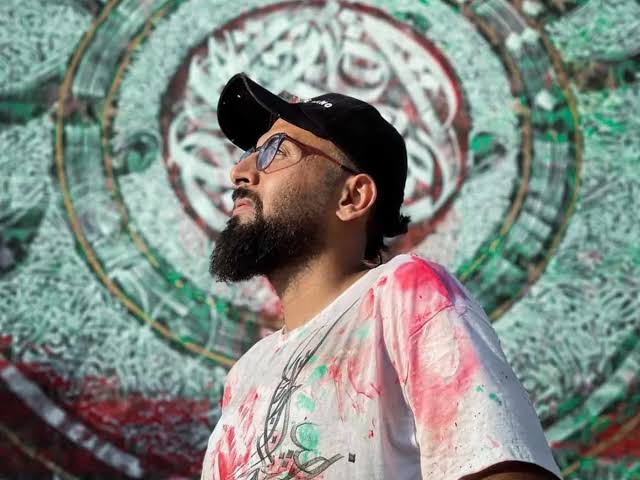
Belal Khaled, a renowned Palestinian photojournalist and graffiti artist, brought Gaza’s painful reality to South African audiences through a striking and emotional media tour. His work, filled with raw imagery and powerful symbolism, stirred hearts and reminded many of the brutal conditions under which Palestinians continue to live. The tour featured a series of events designed to educate, unite and awaken a collective consciousness around the ongoing occupation and humanitarian crisis.
The program began with a press briefing at the Nelson Mandela Foundation and included a historic solidarity march through Soweto, a photo exhibition, and a documentary screening. The response from South Africans was overwhelming, with civil society organisations, trade unions, religious groups and international representatives all taking part. What unfolded was more than a media tour. It became a platform for shared resistance, layered in emotion and shaped by a common history of struggle.
SMread: CAGE Slams UK Government Over Proposed Ban on Palestine Action
Art as Resistance, Photography as Witness
The photo exhibition featured a carefully curated selection of images taken in Gaza, capturing scenes of famine, destruction and survival. Among the most haunting were photos of empty pots symbolising hunger, and shattered homes reflecting lives disrupted by ongoing violence. These visuals did not need lengthy captions or explanations. They told stories that words could not carry, offering an unfiltered view into the devastation of war.
The exhibition made it clear that visual storytelling holds unmatched power. It connected South Africans to Gaza in a deeply personal way, leaving many unsettled, yet more informed and engaged. The photographs served as visual proof of the human cost of the conflict and revealed the resilience of those who live through it daily.
SMread: Soweto Shows Solidarity for Palestine
A March That United Voices
The Soweto march marked a defining moment in the tour. Starting at the iconic Regina Mundi Church and ending at the Dlamini Mosque, the route held historical and emotional weight. It brought together diverse communities in a symbolic walk of remembrance and solidarity. Children lined the entrance to the mosque, forming a guard of honour, while representatives from various organisations walked alongside everyday citizens in a display of unity.
What stood out was not only the size of the crowd but the diversity within it. Faith-based groups, labour unions, social movements and international diplomats all stood for the same cause. Even groups such as Jews for Palestine were present, reminding everyone that justice has no borders and no single voice. Placards carried bold imagery and messages that captured the frustration, grief and courage of those advocating for Palestine.
SMread: Eastern Cape Flood Death Toll Hits 100 as Search Operations Continue
Faith and Film as Anchors of Hope
The screening of the documentary Eyes of Gaza added another dimension to the experience. The film explored themes of resistance, loss, and spiritual strength. Faith was woven through every narrative in the documentary, reminding viewers that patience and gratitude remain central pillars for many Palestinians, even in the darkest of moments.
One particularly moving scene featured an elderly man sitting in the rubble of what once was his home. His quiet acceptance and reference to prophetic simplicity reflected the deep-rooted faith that sustains so many under siege. The documentary offered not only facts but feeling. It gave audiences a space to reflect, grieve and understand the emotional layers behind the statistics.
SMread: South Africa’s High-Stakes Balancing Act on Iran-Israel
Building Momentum Across Cities
Following Johannesburg, the tour moved on to events in Port Elizabeth and Cape Town. Each location added its own historical and cultural layer to the journey. Cape Town’s event was hosted in a historically significant area known for its past of resistance and mobilisation. Community members were urged to attend and experience the photo exhibition and documentary for themselves.
The message shared at each stop remained consistent. There is a need to engage, educate and express solidarity. The tour reminded South Africans of their own history and how it parallels the Palestinian experience in many ways. It created space for reflection, connection and commitment to a greater global cause.
This tour was a reminder that media, when used with purpose and integrity, can become a vehicle for justice. Through powerful visuals and deeply emotional storytelling, Belal Khaled gave voice to the voiceless and built a bridge between two distant lands, joined by their shared longing for dignity and freedom.
For more on this, watch the video below:
Image credit: Timeline Daily
