We were once told to choose: science or art. You either saved lives or you “just” made them prettier. But today’s youth are no longer entertaining those binaries. They’re doctors and dreamers, students and social workers. They’re proving that you can stitch a wound and still write poetry about it, that humanitarian work is a profession of its own, and that choosing compassion over convention is still success.
On World Youth Skills Day, we’re spotlighting the voices of young South Africans who are shaping our country. Whether through stethoscopes, sanitary pads, or something as simple and sacred as sitting beside someone who is hurting.
SMread: A Bosnian Genocide Survivor Tells Her Story
Youth Leading the Frontlines of Care
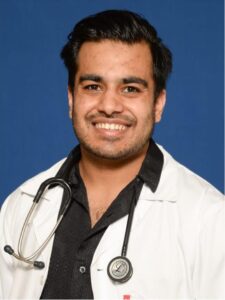
“Being a young Muslim in medicine means more than acquiring knowledge or skills. It is about embodying the values of faith in every interaction.” – Hussein Nabi, final year medical student, Wits University
Born and raised in Johannesburg, Hussein Nabi’s story reminds us that medicine is not just science, it’s service. “My pursuit of medicine has always been about more than just a career,” he says. “It is a calling, deeply rooted in my identity as a Muslim and my desire to serve humanity.”
Whether he is rotating through trauma wards or quietly learning compassion from senior doctors, Hussein carries his faith with him in every step.
For him, healing is not just about science. It is something sacred. The verse, “Whoever saves a life, it is as if he has saved all of mankind” (Qur’an 5:32), is not just something he memorised. It is something he tries to live. Inspired by the Prophet’s teachings of mercy and excellence, students like Hussein are not here to coast. They are here to contribute, to care, and to remind the world that medicine needs both skill and heart.
“We are not merely the future of medicine, we are its present.” – Hussein Nabi
SMread: Firoz Cachalia: New Broom to Sweep Police Clean?
When Saving Lives Means Digging Deeper
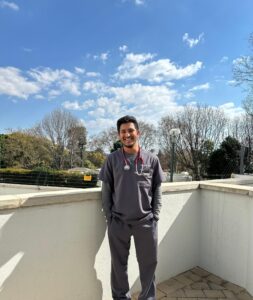
“Becoming a doctor has always been a goal of mine. Not just for the title, but because I see it as a form of service, both to people and to God.” – Huzaifa Patel,, Wits GEMP student.
Huzaifa’s journey into medicine is another proof of how South African youth are walking the line between science and soul. What excites him isn’t only clinical exposure, but the chance to transform systems through public health, early education, and real-world problem solving.
“We’re not sitting back, waiting for our turn,we’re already contributing,” he says.
From rural health drives to speaking up on social media, he reminds us that healing is not always found in hospitals. Sometimes it begins with access, awareness, and showing up for people where they are. For Huzaifa, every hospital round, every baby delivered, every smile from someone who had once lost hope, feels like worship. It is his way of getting closer to God, one act of care at a time.
SMread: Global Muslim Content Creators Summit Aims to Reclaim Narratives
From Galaxies to Grassroots
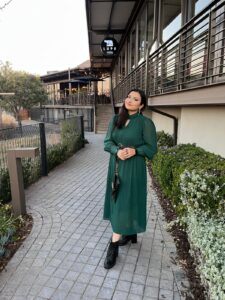
From the edge of the universe to the heart of her community, Javeria Makda is redefining what it means to succeed. With a PhD in Astrophysics and a focus on Dark Matter, she is not just searching the skies for answers. She is also challenging generational expectations. As the most educated woman in her family, where higher education for girls was never seen as important, her journey stands as proof of what is possible.
From presenting at the WAADD to volunteering with Islamic Relief SA and other NPOs, she balances intellect with impact. As the student representative for Women in Physics in South Africa, she uses her platform to inspire girls to enter spaces they were once excluded from. “I want them to know they’re just as capable,” she says, “and that they belong in every lab, lecture hall and boardroom where decisions are made.”
Her path from high school to PhD was uninterrupted, but her purpose runs far deeper. It is not just about research. It is about reach.
SMread: Sierra Leone Opposition Leader Warns of Israeli Threats to Africa
Charity as a Skill: Youth Uplifting Communities Through Service
“We are not always in the means… but we push and try to the best of our ability.” – Aa’ishah Jamal, Colours of Hope.
For many young people today, charity is not something you do after you have made it. It is the very definition of success. Just ask the youth behind Colours of Hope, a women-led non-profit that focuses on humanitarian aid and is powered almost entirely by volunteers, some as young as six.
From packing baby bags for mothers in government hospitals, to raising funds for boreholes in water-scarce schools, to launching Campaign DEW so girls do not miss school because of menstruation, young people are showing up. They are not waiting to grow up before making a difference. They are already building the kind of world they want to live in.
“How can you not be humane when you are a human?” asks Aa’ishah Jamal from Colours of Hope.
In every abandoned baby cradled and every hungry child fed, the youth of Colours of Hope are showing a level of emotional intelligence and social commitment that no textbook can teach.
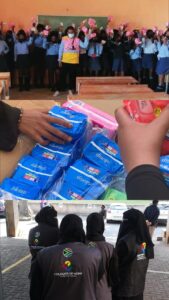
Rewriting the Script on ‘Success’
For too long, young people were told that only engineers, doctors, and accountants mattered. That a career in art, activism, or humanitarian aid was secondary. That creative expression didn’t contribute the way STEM did. But we’re rewriting that script.
The youth are not one-dimensional. They are not either-or. They are artists and activists. Scientists and seekers. Some save lives with scalpels, others with soup kitchens. Some write prescriptions, others write poems that heal just as deeply.
And that’s exactly the point.
So, What Can You Do?
You might not be able to study medicine. You might not be able to build a borehole or travel to a war zone. But here’s what you can do:
- Pack a baby bag.
- Donate one meal.
- Visit one old-age home.
- Start a campaign at school.
- Be kind. Every day.
On this Youth Skills Day, may we remember that skills aren’t always found in certificates. Sometimes, they’re in the ability to serve with integrity, to speak up with courage, and to cry when you see injustice, and then do something about it.
Featured image: ET Education
