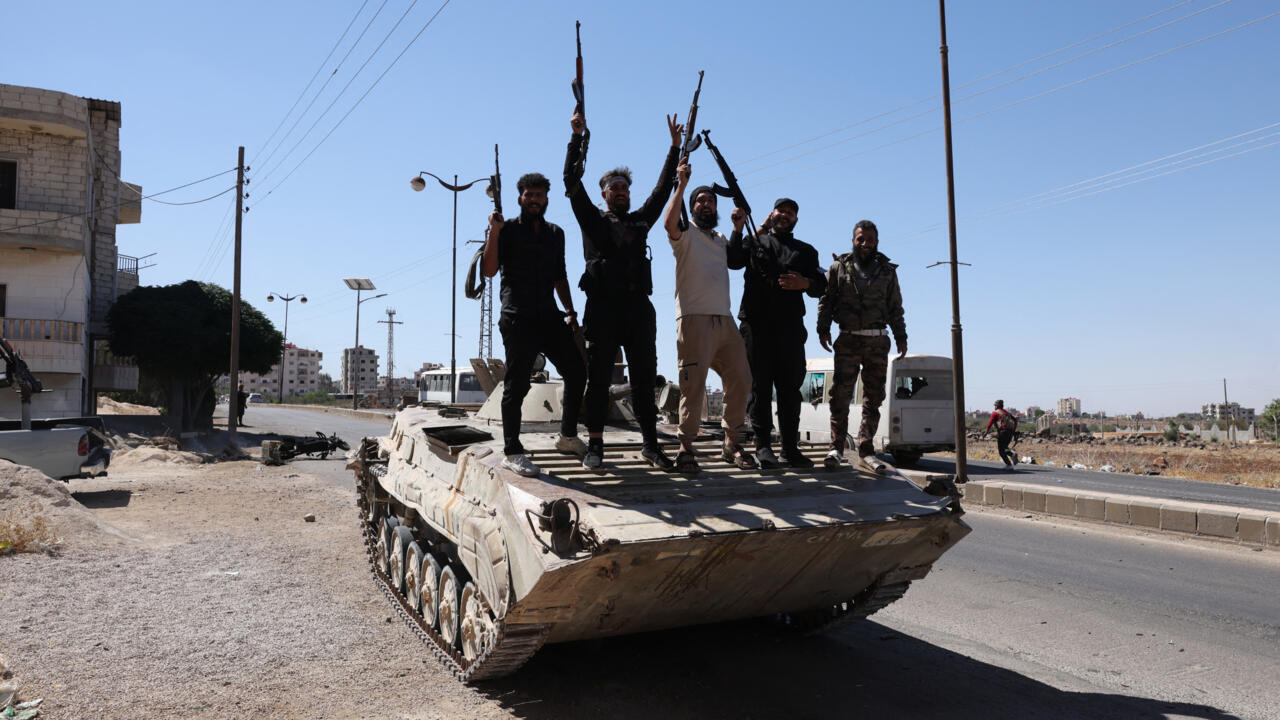
A fragile ceasefire has been established in southern Syria, bringing a halt to four days of deadly fighting between Syrian government forces and local Druze fighters in the Sweida province. The agreement, confirmed by Syrian President Ahmed al-Sharaa and one of the Druze spiritual leaders, Youssef Jarboua, led to the withdrawal of the Syrian army from the flashpoint city of Sweida on Wednesday night.
The truce was brokered following intense international mediation, including from the United States, Turkey, and other Arab nations, after the conflict escalated dramatically. The violence prompted significant Israeli military intervention, with airstrikes targeting Syrian government and military facilities in Damascus, including the Ministry of Defence headquarters.
SMread: The Hague Group announces diplomatic and economic measures against Israel
Withdrawal to avoid “broader war”
The clashes initially erupted from a local dispute between Arab Bedouin tribes and Druze fighters, which intensified when government forces intervened. In a televised address on Thursday, President al-Sharaa stated the decision to withdraw was made to avoid dragging the country “into a new, broader war” and to prioritise the interests of the Syrian people “over chaos and destruction.”
He framed the choice as one between an “open war” with Israel at the expense of Druze citizens or allowing community leaders to de-escalate the situation.
Under the terms of the ceasefire, a monitoring committee will be formed with Druze leaders, who will now be responsible for security within the predominantly Druze province. President al-Sharaa also acknowledged that “lawless groups” had committed crimes against civilians and vowed to “hold accountable anyone who wronged or harmed our Druze brethren.”
The conflict posed the most significant challenge to the new government in Damascus since it came to power. The violence resulted in a high death toll, with the UK-based Syrian Observatory for Human Rights reporting that more than 350 people were killed in the fighting.
The situation remains tense, as the longevity of the ceasefire is uncertain. A previous agreement collapsed within hours, and a prominent Druze spiritual leader, Sheikh Hikmat al-Hijri, has rejected the new truce and called on his followers to continue fighting. This division within the Druze leadership casts doubt on the stability of the peace.
The events have also strained the recent diplomatic progress between Syria and Israel, which had been engaged in security coordination talks. Israel stated its airstrikes were a “message” to President al-Sharaa regarding the events in Sweida and were intended to protect the Druze community.
Image: Syrian security forces stand on a tank in the predominantly Druze city of Sweida on July 15, 2025. Credit: Bakr Alkasem/AFP
