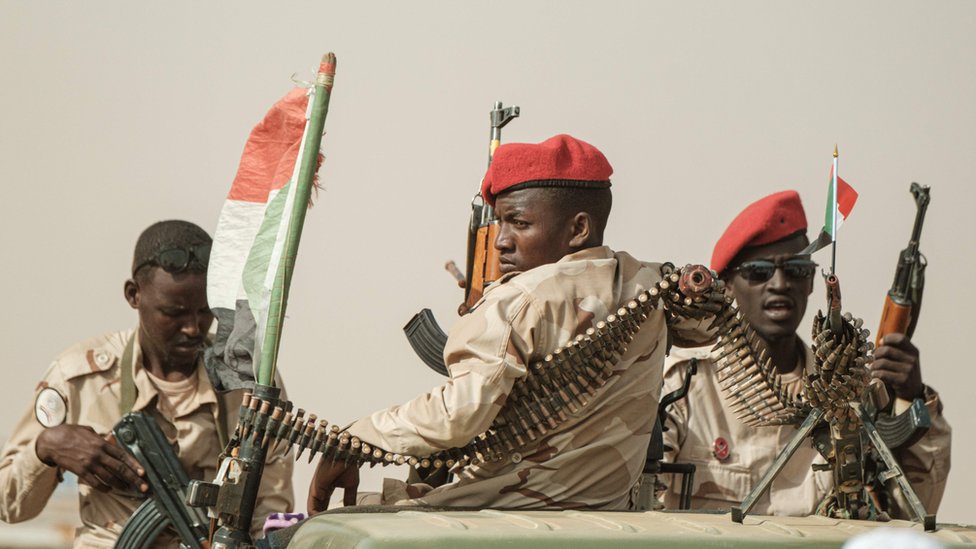
Sudan’s political crisis has significantly deepened after the paramilitary Rapid Support Forces (RSF) and its allied groups announced the formation of a rival administration on Saturday, 27 July 2025. This move establishes a parallel government, escalating the 27-month-long conflict with the Sudanese army and intensifying concerns about the nation’s potential breakup.
The announcement was made at a press conference in Nyala, the largest city in the RSF-controlled South Darfur region. The coalition appointed Mohamed Hassan al-Ta’ayshi as prime minister for what it termed the “government of peace and unity.” Al-Ta’ayshi is a civilian politician and a former member of Sudan’s transitional sovereign council, which was dissolved following a military coup in 2021.
This development formalises the split in the country’s governance, with the internationally recognised, army-aligned administration based in Port Sudan now facing a direct challenge. United Nations officials have warned that the creation of a parallel government could severely complicate diplomatic efforts to end the war, which began in April 2023.
SMread: Legal battle looms as Sahuc faces backlash from Muslim community
A new leadership structure
The RSF-led coalition also introduced a 15-member presidential council. RSF commander General Mohamed Hamdan Dagalo, widely known as Hemedti, was named its president. Abdelaziz al-Hilu, a prominent rebel leader from the Sudan People’s Liberation Movement-North (SPLM-N) who controls territory in southern Sudan, was appointed vice president.
The appointments are a direct result of a political charter signed in February in Nairobi by the RSF and various allied factions. Their stated goal is to establish a secular “New Sudan,” a move that challenges the authority of the military government led by General Abdel Fattah al-Burhan. The Sudanese army, which recently retook the capital, Khartoum, and controls the country’s north, east, and centre, has not yet officially responded to the announcement.
The formation of this parallel government has been met with condemnation from rivals. Minni Arko Minawi, the army-aligned governor of Darfur, dismissed the action, stating it “appears to be sharing responsibility for the crimes and violations they committed equally with their allies.” The Darfur region now effectively has two competing governors.
The conflict, rooted in a power struggle between former allies Dagalo and al-Burhan, has devastated Sudan. It has created one of the world’s most severe humanitarian crises, with an estimated 150 000 people killed, millions displaced, and much of the population facing the threat of famine as basic services have collapsed.
Image: AFP
