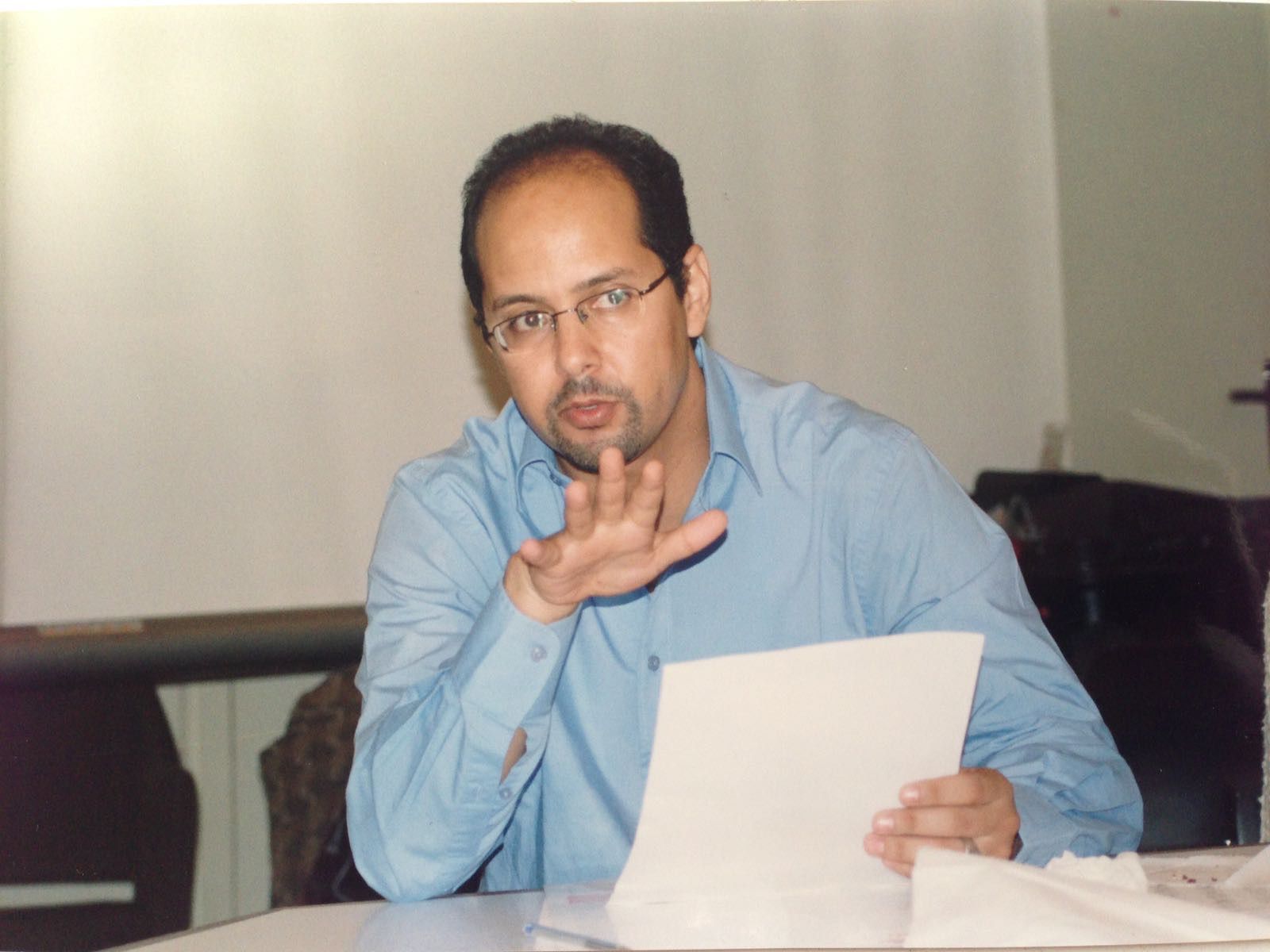
By: Naama Asfari
For us, the Sahrawis, resistance means firmly opposing the occupation. The history of our society, like the history of all human societies, advances through successive shocks, merging with the challenges that present themselves. Our innate inclination toward optimism pushes us toward a harmonious and gradualist vision of history.
This perspective explains humanity’s long march as a process oriented toward a goal: individual freedom, wrested step by step. This idealism—placing responsibility at the heart of human existence—we inherited from thinkers and philosophers among whom is Jean-Paul Sartre. However, this ideal conception strongly clashes with contemporary reality, closer to the pessimistic vision of the German philosopher Walter Benjamin, who committed suicide in September 1940 while fleeing Nazism. For him, history is nothing but an inevitable chain of catastrophes.
The road toward freedom is long and arduous. It requires prudent dialectical choices and a Stoic commitment, as Seneca illustrates in The Constancy of the Wise Man, a fundamental Stoic text teaching resilience in the face of adversity.
This road is filled with obstacles that from afar appear unattainable, like those mountains that from a distance seem extremely steep and difficult to cross due to an optical illusion. But as one approaches, what seemed like a solid mass gradually opens up: the steep slopes reveal the possibility of reaching them, and the summit is attained smoothly.
A true ethics does not deny the tragic and the incomprehensible in human existence; it thinks of reality as it is, harsh in its harshness. Faced with a military occupation supported by strong alliances, the road becomes more complex. The resentment of the oppressed, whatever form it takes, is not only understandable but also natural. But it is not always acceptable, as it may endanger the outcomes that hope can achieve.
“One must not despair, but must hope,” to confront Stéphane Hessel’s cry in Indignez-vous! If hope is the road to a just and equitable peace, then no concession is possible on the right to happiness. To burn with hope is a form of radiance.
I draw on the work of Stéphane Hessel and evoke Article 15 of the Universal Declaration of Human Rights: “Everyone has the right to a nationality”. And although this Declaration has more symbolic than legal force, it has played a historically significant role. Since 1948, it has inspired colonised peoples in their struggle for independence, and it sowed the seeds of equality for the Sahrawi people in their struggle for freedom and self- determination since the dawn of history.
Member states of the United Nations commit themselves to respecting universal rights and believing in their absolute value. And it is intolerable that Morocco has occupied Sahrawi territories since 1975, in flagrant violation of UN principles. And like other states, Morocco acts with total impunity, but no state is above international law—neither Morocco nor Israel. Every state must be subject to rigorous criticism, without exception or complacency.
I add to this Sartre’s words, written in 1947 in Situations II: “I know only violence; and in whatever form it manifests, it is a failure; but it is an inevitable failure because we are in a world of violence; and if it is true that resorting to violence against violence risks consecrating it, it is equally true that it is the only means of ending it.”
In the name of this principle, Sartre supported the liberation movements in Algeria and Palestine. And later, in Hope Now (published in Nouvel Observateur), he said: “We must attempt to explain why the world of today, which is a terrible world, is only a moment in the long historical evolution, and that hope has always been one of the dominant forces in revolutions and uprisings, and why I still feel hope as my conception of the future”.
Together with my imprisoned brothers, I am convinced that hope is the road that must be taken, and that the future rests on the reconciliation of peoples. And through this road we will overcome the current stage, both on the side of the oppressors and of the oppressed.
It is necessary to reach negotiations to eliminate repression, injustice, and occupation. To this end, excessive hatred must be avoided. The message of the Sahrawi political prisoners, held in the prisons of the Moroccan occupation, is a call to hope: it expresses confidence in the ability of both parties—the oppressor and the oppressed, with the support of international actors—to overcome misunderstanding through mutual understanding and vigilant patience. It is a call to sow moderation to build a just and lasting peace, based on the right of all peoples, enabling the Sahrawi people to freely decide their destiny, and the Moroccan people to regain the peace and prosperity that new generations have long awaited.
On the occasion of the 48th Eucoco
Paris, 28–29 November 2025
Asfari is a Sahrawi activist and political prisoner, abducted on 7 November 2010, on the eve of the violent dismantling of the Gdeim Izik dignity camp.
