Image Source: The Islamic Information
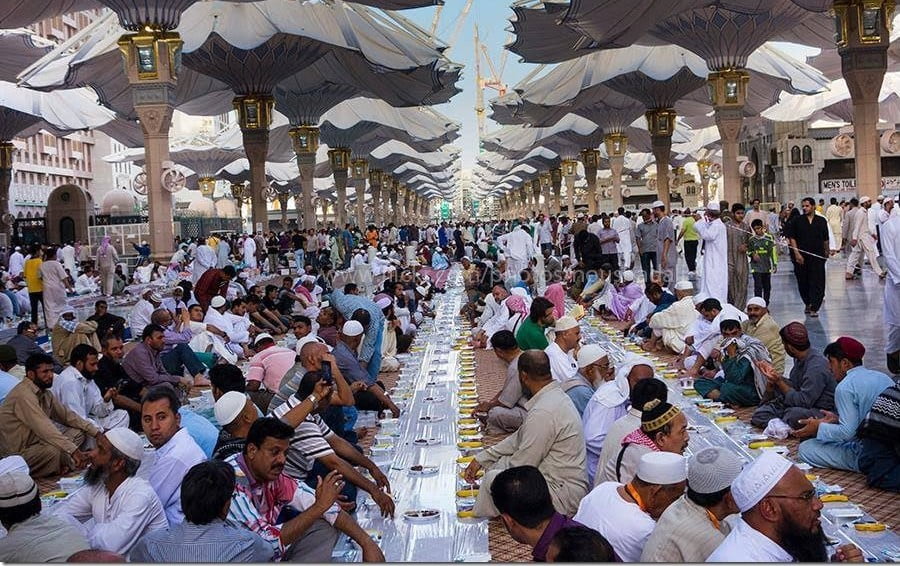
Local – Though in Ramadan Muslims refrain from food and drink during daylight hours and are urged not to consume in excess, the reality of iftar gatherings across South Africa tells a different story.
Mosques, community halls and households bear witness each evening to mounting food waste, mountains of single-use plastic, and a culture of overservicing that sits uneasily alongside Islamic teachings of moderation.
However, a new initiative is seeking to change that. Masjid 360, born from the Association of Muslim Built Environment Professionals, is calling on Muslim communities to confront the environmental cost of iftar, embedding eco-conscious practices into places of worship and, through them, into homes and future generations.
Environmentalist and sustainability specialist Leena Ackbar explained how the initiative grew from a professional conversation about eco-friendly building materials into a broader vision for Islamic stewardship of the planet.
“It started around last year sometime when we were having a conversation on our professional platform about eco-friendly building materials, and then one of the members had posed this question — what would we do when Allah asks us a question, what have we done with the intelligence that he has blessed us with?” Ackbar said.
From Concept to Community
The initiative launched in September 2024, choosing Ramadan for its first campaign after recognising that mosques generate significant waste during iftar.
With South Africa disposing of an estimated 90 per cent of its waste and no new landfills built in the past two decades, the environmental stakes are considerable.
Ackbar stated that meaningful change must begin at the source, cautioning that no amount of recycling can undo the damage caused by overproduction.
“Zero waste begins at planning, not at the point of disposal — if we overproduce and overserve, no amount of sustainability initiative or recycling can actually fix that. So this is definitely a mindset shift that is certainly required in our community,” Ackbar added.
The Plastic Problem
One of the most visible symbols of plastic waste in mosques is the individually packaged bottled water distributed at iftar and tarawih.
Built environment professional Suiliman Patel acknowledged that behavioural change is a gradual process, but outlined practical steps already being implemented at his own masjid.
Patel showed that small, immediate actions can begin shifting a community’s mindset well before larger structural changes take hold.
“I’ve gone, for example, to the muadhin and I’ve given him two empty packets, and I said okay, but for all the bottle caps — all the bottle caps take the bottle caps and basically put it inside there, and at least we could use it and give it for recyclables kids using it for projects,” Patel said.
For Masjid 360, the zero-waste iftar campaign is a stepping stone toward a comprehensive green rating framework for mosques and madrasas.
Patel stated that the environmental audit of Muslim institutions extends well beyond food, encompassing solar energy, grey water harvesting from wudhu facilities, and even the lifecycle of mosque carpets.
Patel framed the broader work as a matter of environmental justice, one that sits at the heart of what it means to be a Muslim in the modern world.
“Social justice is more than that. Part of this is also to be able to look at environmental justice… It’s not only about the food at iftar, but it’s also about the wudhu water that you use. It’s about the energy that’s being used. It’s why our masjid is not using and migrating to solar,” Patel said.
